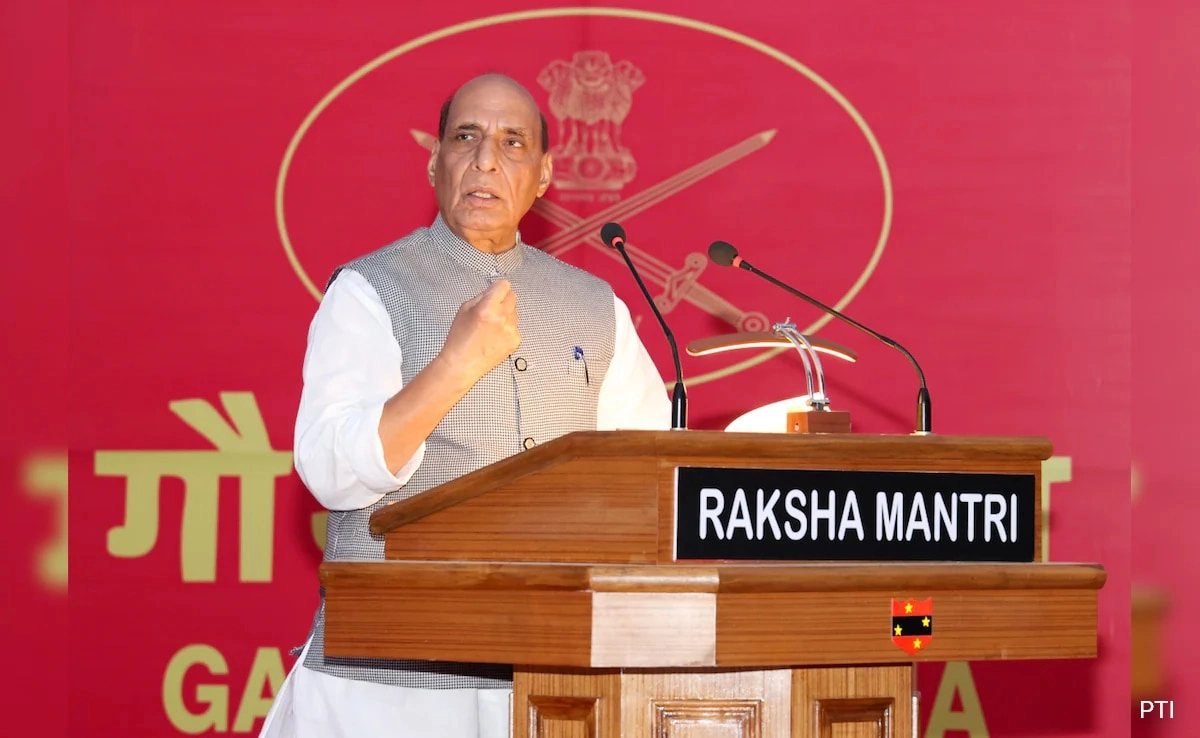
Union Home Minister Rajnath Singh recently stirred controversy by comparing the first Prime Minister of India, Jawaharlal Nehru, to the Mughal emperor Aurangzeb, whom he described as a “bigot” and a “cruel ruler.” Singh’s remarks were made during a public address, where he highlighted what he perceives as Nehru’s failures in governance and his approach to national unity. By invoking Aurangzeb’s name, Singh aimed to underscore what he believes are Nehru’s authoritarian tendencies and his alleged inability to foster a cohesive national identity, pointing to historical grievances that some attribute to Nehru’s policies.
Singh’s comments are part of a broader narrative that has emerged in Indian politics, especially among certain factions that seek to critique Nehru’s legacy. The comparison to Aurangzeb, a figure often associated with religious intolerance and oppression, suggests that Singh views Nehru’s policies as detrimental to the fabric of Indian society. This perspective resonates with those who feel that Nehru’s vision of secularism and democratic governance overlooked the complexities of India’s diverse cultural and religious landscape. Singh’s remarks have ignited discussions about Nehru’s role in shaping modern India, his policies towards minorities, and the long-standing debates over historical interpretations.
Critics of Singh’s statement argue that equating Nehru with Aurangzeb is not only historically inaccurate but also serves to polarize public sentiment. They contend that Nehru played a crucial role in establishing the foundations of a secular and democratic India, prioritizing unity amidst diversity. Supporters of Singh, however, might assert that such comparisons are necessary to critique a legacy that they believe has led to contemporary challenges in Indian society. The invocation of historical figures like Aurangzeb in political discourse reflects the ongoing struggle over India’s historical narrative and the interpretation of its leaders’ legacies.
As India continues to grapple with its complex identity, the discourse surrounding leaders like Nehru becomes increasingly relevant. Singh’s comments highlight the dichotomy in how prominent figures in Indian history are perceived, revealing deep-seated divisions in contemporary society. Whether one agrees with Singh or not, the discussion raises important questions about the values that should guide India’s future and the lessons to be learned from its past. In this context, the debate over Nehru’s legacy is likely to persist, as different factions seek to shape the narrative of India’s history and its implications for the country’s trajectory moving forward.