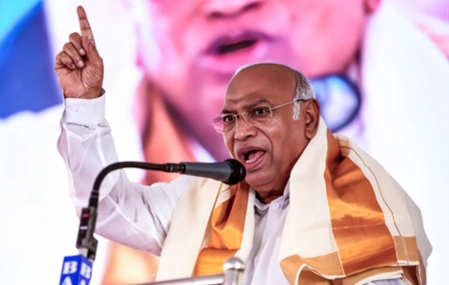
The statement made by Congress President Mallikarjun Kharge referring to “illiterate Gujaratis” has sparked significant controversy, drawing sharp criticism from leaders of the Bharatiya Janata Party (BJP). This remark, made during a political rally, was interpreted as an insult to the people of Gujarat, and BJP leaders were quick to respond, arguing that such comments reflect a lack of respect for the electorate. They emphasized that the people of Gujarat have a rich cultural heritage and a strong history of entrepreneurship, which should not be undermined by derogatory remarks.
BJP spokespersons have accused Kharge of underestimating the intellect and capabilities of the Gujarati populace, arguing that the state’s citizens have made substantial contributions to the country’s economic growth and development. They highlighted the entrepreneurial spirit prevalent in Gujarat, which has produced numerous successful businesses and has been a significant contributor to India’s economy. In their counter-arguments, BJP leaders urged Kharge to apologize for his comments, asserting that political discourse should be grounded in respect and dignity, especially when addressing the electorate.
The fallout from Kharge’s statement has sparked a wider debate about the tone and nature of political rhetoric in India. Many political analysts suggest that such remarks can alienate voters and contribute to a toxic political environment. As the political landscape continues to evolve, it remains vital for leaders to engage with the electorate in a manner that fosters understanding and respect rather than division. The ongoing exchanges between the Congress and BJP highlight the intense rivalry in Indian politics, where every statement can have significant repercussions on public perception and electoral outcomes.