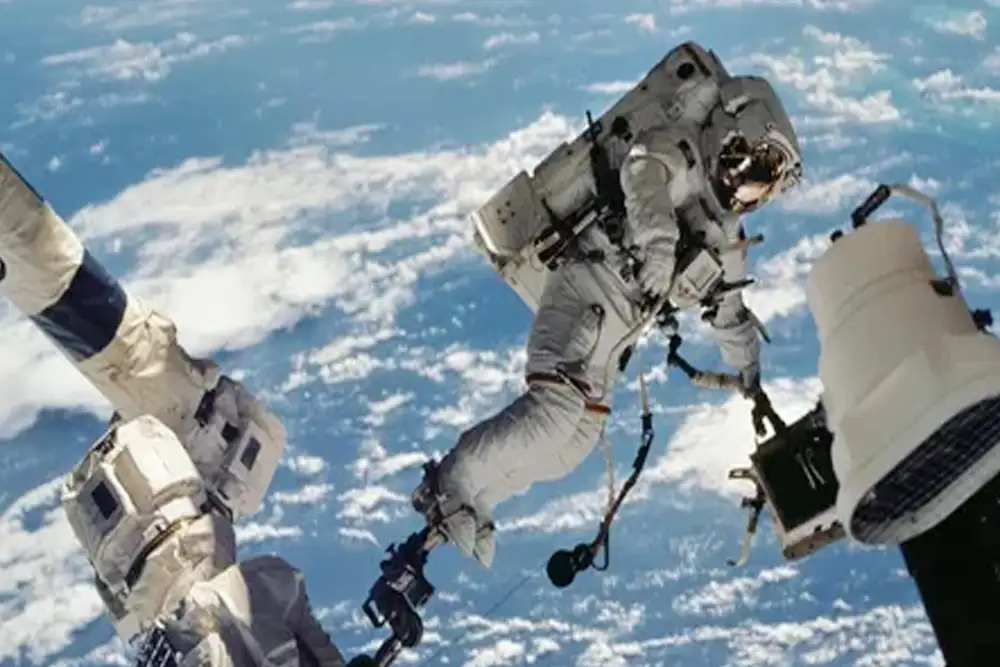
Astronauts often experience an increase in height while they are in space, a phenomenon caused by the microgravity environment of the International Space Station (ISS) or other spacecraft. On Earth, gravity exerts a constant force on our bodies, compressing the vertebrae in our spines. This compression limits our height to a certain extent. However, once in the microgravity environment of space, the spine can expand, leading to a temporary increase in height. Research has shown that astronauts can grow up to 2 inches (about 5 centimeters) taller during their time in space.
The reason behind this change lies in the way our bodies respond to the lack of gravitational pressure. In microgravity, the intervertebral discs, which act as cushions between the vertebrae, can absorb more fluid and expand. This increased fluid retention allows for greater separation between the vertebrae, resulting in an elongated spine. This process is reversible, and upon returning to Earth, astronauts typically regain their original height as gravity reasserts its influence on their bodies.
Additionally, the increase in height can be accompanied by other physiological changes, such as alterations in fluid distribution and muscle atrophy. The absence of gravity affects not only the spine but also the overall musculoskeletal system. Astronauts must engage in regular exercise to counteract these effects and maintain their strength and bone density while in space. Understanding these changes is crucial for preparing astronauts for long-duration missions and ensuring their health and well-being during and after their time in space.
In summary, the increase in height experienced by astronauts is a fascinating aspect of human physiology in response to the unique conditions of space travel. The temporary elongation of the spine highlights the adaptability of the human body, but it also underscores the challenges posed by microgravity. As space exploration continues to advance, studying these phenomena will remain essential for developing strategies to support astronauts on extended missions to destinations such as Mars or beyond.