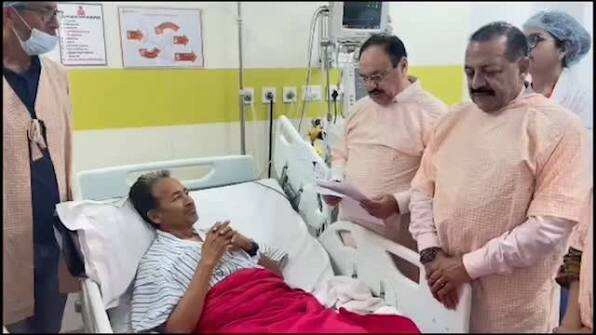
After a 26-day hunger strike, Sonam Wangchuk has been discharged from the hospital. Upon his release, he made his way to Rajghat, where he paid homage to Mahatma Gandhi. In a video statement, Wangchuk emphasized the continued relevance of Gandhi’s principles, stating, “Bapu’s path is still the most relevant today.” His remarks highlight the enduring significance of Gandhi’s teachings in today’s society, especially in the context of environmental issues and social justice.
Wangchuk, a prominent education reformist and environmentalist from Ladakh, undertook this hunger strike to raise awareness about pressing issues such as climate change and the need for sustainable development in the Himalayan region. His actions have sparked discussions around the importance of grassroots movements and the role of individuals in effecting change. By aligning his message with Gandhi’s philosophy of non-violence and truth, Wangchuk aims to inspire a collective effort toward addressing these critical challenges.
The hunger strike drew considerable attention from both the media and the public, reflecting the growing concern for environmental degradation and the impact of modernization on fragile ecosystems. Wangchuk’s return from the strike marks not just a personal milestone but also a renewed call for action among his supporters and the wider community. His commitment to sustainable practices and his advocacy for the rights of marginalized communities resonate with many who are seeking alternatives to conventional development models.
In his video at Rajghat, Wangchuk reiterated the idea that Gandhi’s approach offers a pathway to resolving contemporary issues. He urged people to rethink their relationship with nature and to adopt practices that promote ecological balance. As he continues his advocacy work, Wangchuk’s journey serves as a reminder of the power of peaceful protest and the importance of staying true to one’s principles in the face of adversity.