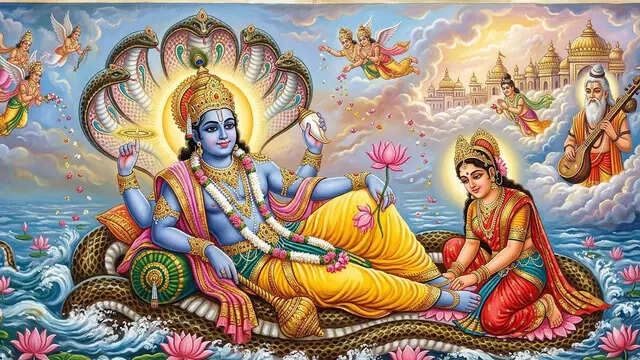
Devshayani Ekadashi marks the beginning of Chaturmas, a sacred period in the Hindu calendar that lasts for four months. During this time, it is believed that Lord Vishnu, also known as Narayana, goes into a deep slumber, leading to a pause in many auspicious activities. This annual event is not just a religious observance but also reflects the cyclical nature of time and the balance between activity and rest in the cosmos.
The four months of Chaturmas include the rainy season, a time when the earth rejuvenates and recharges. Traditionally, many Hindus refrain from undertaking significant life events such as weddings, housewarming ceremonies, or any other major celebrations during this period. This practice is rooted in the belief that the energies during these months are more conducive to introspection, spiritual growth, and nurturing the soul rather than engaging in worldly affairs. The period is considered ideal for deepening one’s spiritual practices, including prayer, fasting, and meditation.
As the end of Chaturmas approaches, devotees eagerly await the day when Lord Vishnu awakens, symbolizing the resumption of auspicious activities and the fulfillment of desires. The exact date of awakening varies each year, typically coinciding with the festival of Devuthani Ekadashi, which falls on the eleventh day of the bright fortnight in the month of Kartik. This day is celebrated with great fervor, as people believe that it is a time when new ventures and projects can begin with divine blessings.
In essence, Chaturmas serves as a reminder of the importance of balance in life, urging individuals to take time for reflection and spiritual nourishment. The significance of this period extends beyond mere rituals; it emphasizes the harmony between earthly engagements and the divine, encouraging believers to align their actions with the rhythms of nature and the cosmos. The awakening of Narayana thus signifies not only the resumption of worldly activities but also the renewal of hope and the promise of new beginnings.