
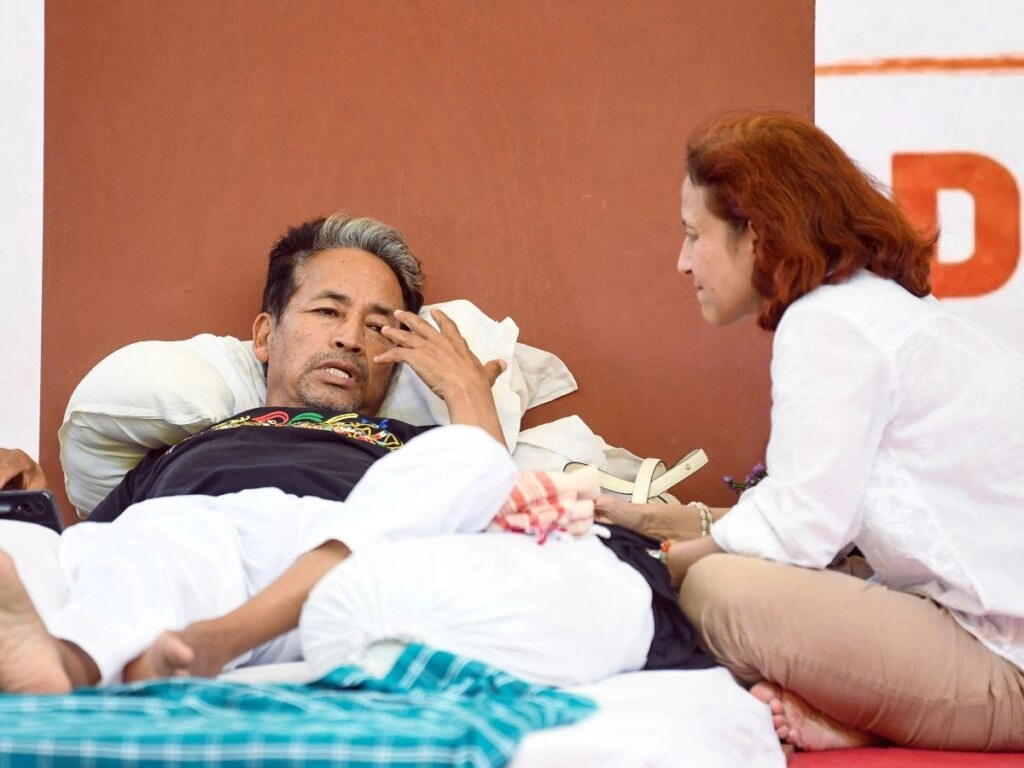
Sonam Wangchuk, a prominent engineer and environmental activist from Ladakh, recently made headlines with his hunger strike aimed at advocating for the rights and sustainable development of the region. His protest garnered significant attention, drawing in local communities and environmentalists who rallied behind his cause. After several days of fasting, Wangchuk engaged in discussions with JP Nadda, the National President of the Bharatiya Janata Party (BJP), which marked a pivotal moment in his protest.
Following the talks, Wangchuk announced that he would conclude his hunger strike. The discussions reportedly focused on critical issues concerning the ecological preservation of Ladakh and the need for policies that would ensure the region’s sustainable development while respecting its unique cultural and environmental landscape. Wangchuk expressed cautiously optimistic sentiments regarding the outcome of the talks, highlighting the importance of continued dialogue between local leaders and government officials.
The outcome of Wangchuk’s hunger strike and his meetings with political leaders have sparked conversations about the future of Ladakh. Many hope that this engagement will lead to actionable policies that prioritize the region’s ecological integrity and the welfare of its inhabitants. Wangchuk’s actions have not only drawn attention to the pressing issues facing Ladakh but have also emphasized the role of grassroots activism in shaping policy discussions. As the situation develops, the community and stakeholders are watching closely to see how the government responds to the demands for sustainable solutions in this environmentally sensitive region.


