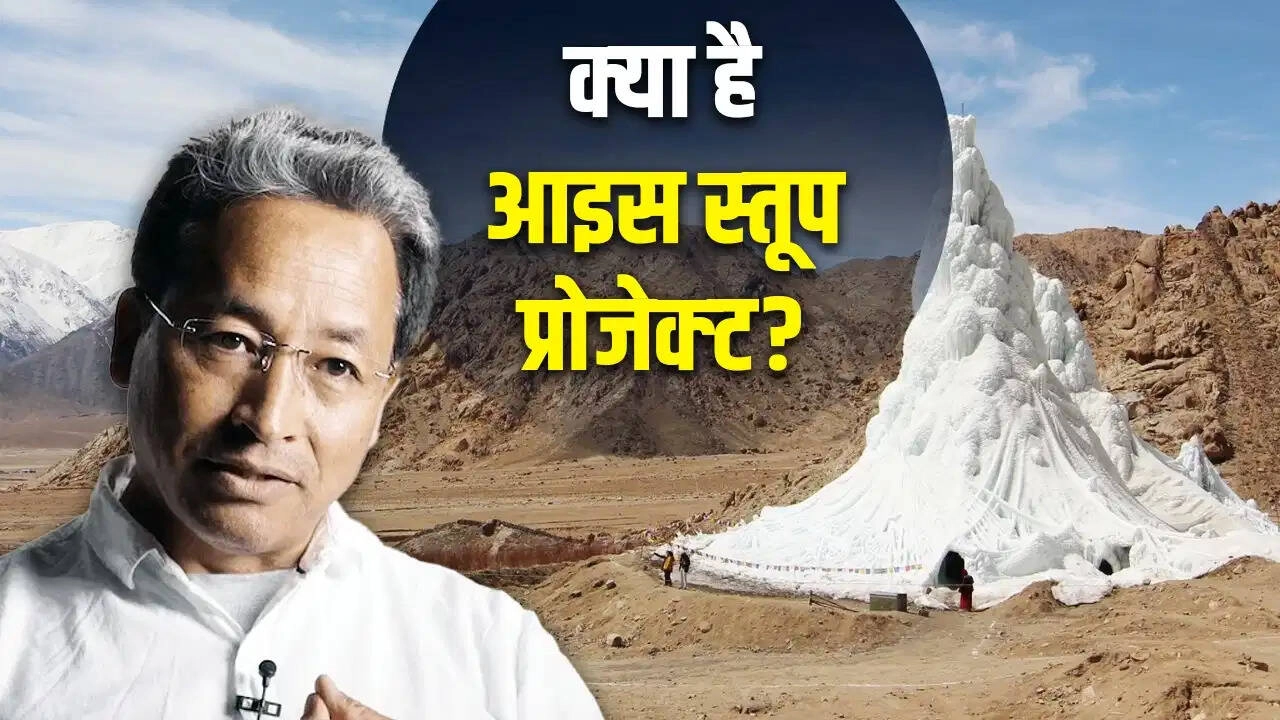
Sonam Wangchuk’s ice stupas are a remarkable innovation designed to address the pressing issue of water scarcity in the Ladakh region of India. These artificial glaciers are created by channeling water from rivers and streams during the winter months. The water is then allowed to flow in a controlled manner, where it freezes and forms towering structures of ice resembling stupas, which are traditional Buddhist stupas found in the region. This ingenious method not only creates a sustainable source of water but also helps in recharging the groundwater table, providing vital irrigation for crops during the arid summer months.
The impact of these ice stupas on the local farming community has been profound. Traditionally, Ladakh’s farmers faced significant challenges due to the harsh climate and limited water supply, making agriculture a daunting task. With the introduction of ice stupas, farmers are now able to access water when they need it the most, thus enhancing agricultural productivity and improving their livelihoods. This transformation has allowed them to cultivate crops that were previously unsuitable for the region, leading to greater food security and economic stability.
Moreover, Sonam Wangchuk’s initiative has inspired a sense of community and collaboration among the people of Ladakh. The project encourages local participation in the construction and maintenance of these ice stupas, fostering a spirit of teamwork and resilience. By harnessing traditional knowledge alongside modern technology, the initiative not only addresses immediate water needs but also contributes to the long-term sustainability of the region’s ecosystem. As a result, Sonam Wangchuk’s ice stupas stand as a beacon of hope for the farmers of Ladakh, showcasing how innovative solutions can effectively tackle environmental challenges while improving the quality of life for local communities.