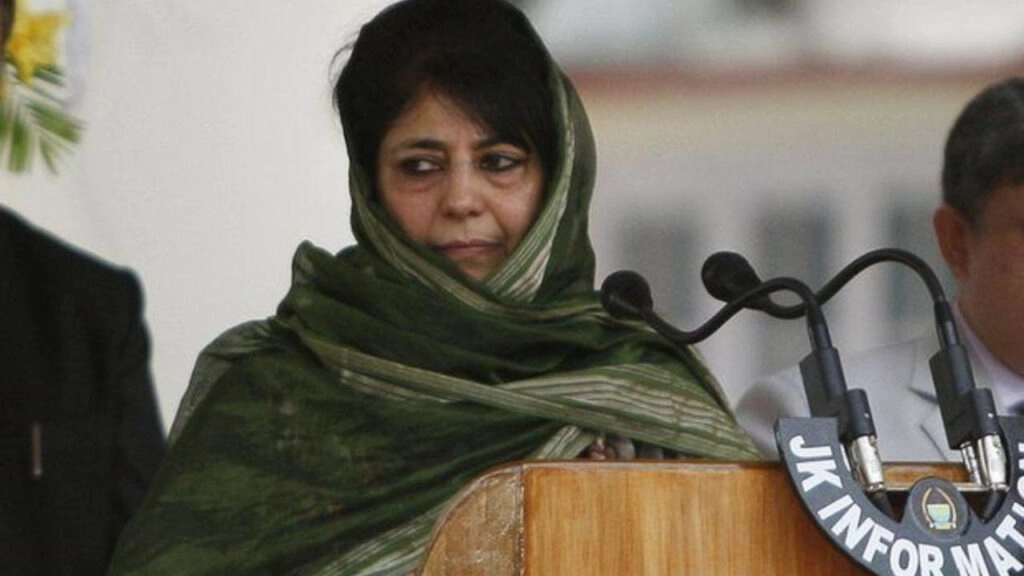
Former Jammu and Kashmir Chief Minister Mehbooba Mufti has reportedly been placed under house arrest, a move that has sparked significant political controversy. This development comes as Mufti’s daughter, Iltija Mufti, took to social media to share a video that claims to highlight the government’s oppressive actions against her mother. In her post, Iltija accused the authorities of curtailing Mehbooba’s freedom of expression and silencing her political voice.
The situation has drawn widespread attention and criticism, with many viewing it as an infringement on democratic rights. Iltija’s statements emphasize that such actions are not only targeted at her mother but are part of a broader pattern of suppressing dissenting voices in the region. In her video, she articulated her concerns about the implications of these actions for political discourse in Jammu and Kashmir, a region already fraught with tensions and historical challenges related to governance and civil liberties.
The house arrest of Mehbooba Mufti is seen by many as an attempt to stifle opposition and limit the influence of leaders who have been critical of the current government. This incident has reignited debates about the state of democracy in Jammu and Kashmir, as well as the central government’s approach to managing political dissent. As the situation unfolds, it remains to be seen how this will impact the political landscape and the ongoing struggle for rights and representation in the region.