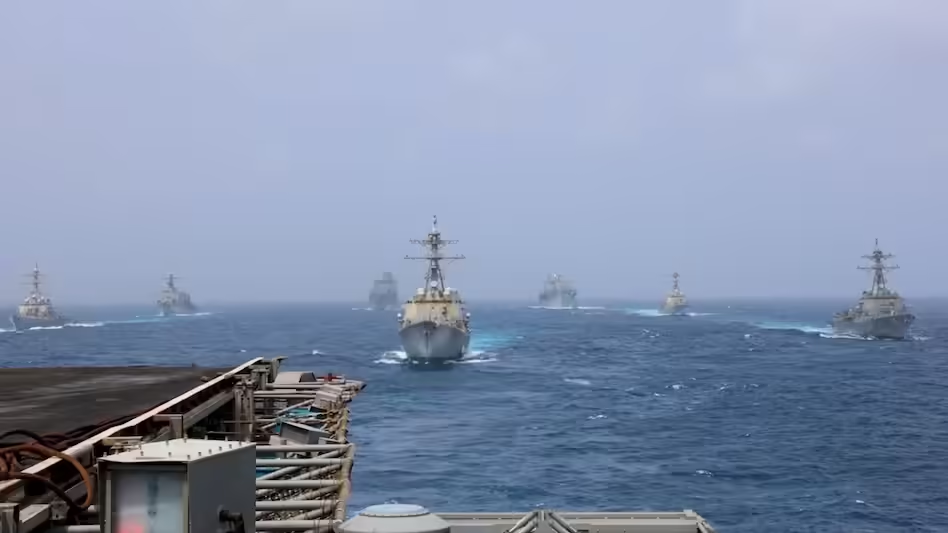
The United States has recently deployed 20 warships and hundreds of fighter jets in the region, raising concerns about escalating tensions with Iran. This military buildup appears to be a strategic maneuver that could signify a shift in U.S. policy towards the Iranian maritime activities. Some analysts speculate that this deployment could be part of a broader strategy initiated during Donald Trump’s presidency, which included stringent measures against Iran and its naval operations.
The positioning of such a significant military presence suggests that the U.S. is prepared to assert its influence in the region and potentially confront Iranian vessels if necessary. This development comes amid ongoing geopolitical tensions, particularly concerning Iran’s nuclear program and its role in regional conflicts. The presence of American naval forces may serve as a deterrent to Iranian provocations and could be seen as a signal of support for U.S. allies in the region.
Furthermore, the deployment of fighter jets enhances the operational capabilities of the U.S. military in the area, allowing for rapid response to any emerging threats. This move could also be interpreted as a warning to Iran regarding its maritime activities, particularly in the Strait of Hormuz, a crucial waterway for global oil shipments. As tensions rise, the international community watches closely, wondering whether this military buildup will lead to further confrontations or if diplomatic avenues will be pursued to de-escalate the situation.