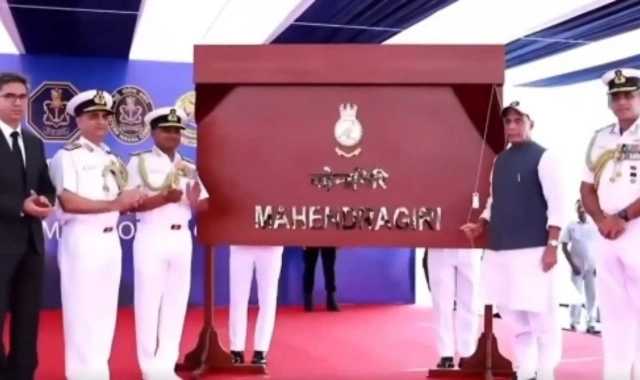
The Indian Navy has significantly enhanced its maritime capabilities with the recent induction of the stealth frigate INS Mahendragiri. This modern warship is part of India’s ongoing efforts to strengthen its naval fleet amidst evolving regional security dynamics. The INS Mahendragiri is designed to operate in various maritime environments and is equipped with advanced technologies that improve its stealth features, making it more difficult for adversaries to detect. Its induction represents a crucial step in India’s strategy to maintain a robust naval presence in the Indian Ocean Region (IOR), a vital area for trade and strategic interests.
INS Mahendragiri is equipped with a formidable array of weaponry and advanced systems that enhance its operational effectiveness. The frigate can engage in anti-air, anti-surface, and anti-submarine warfare, ensuring it can address multiple threats simultaneously. This versatility is essential given the increasing maritime challenges faced by India, including piracy, smuggling, and the growing presence of naval forces from other nations in the region. Furthermore, the ship’s state-of-the-art radar and sensor systems provide superior situational awareness, enabling it to respond rapidly to potential threats.
The commissioning of INS Mahendragiri also reflects India’s commitment to indigenization in defense production. Built by Indian shipyards, this frigate showcases the country’s growing capabilities in constructing advanced naval vessels. The move towards self-reliance in defense manufacturing is crucial for India, as it seeks to reduce dependence on foreign suppliers while enhancing its strategic autonomy. As tensions in the Indo-Pacific region continue to rise, the introduction of advanced platforms like INS Mahendragiri is vital for ensuring that the Indian Navy remains a formidable force capable of protecting national interests and contributing to regional stability.
Overall, the addition of INS Mahendragiri to the Indian Navy’s fleet underscores a broader trend of modernization and preparedness in response to a changing security landscape. As India continues to expand its naval capabilities, the focus will remain on not only enhancing the fleet’s technological edge but also fostering collaborations with other nations to ensure collective maritime security. The strategic implications of such advancements cannot be overstated, as they play a critical role in shaping the balance of power in the Indian Ocean and beyond.