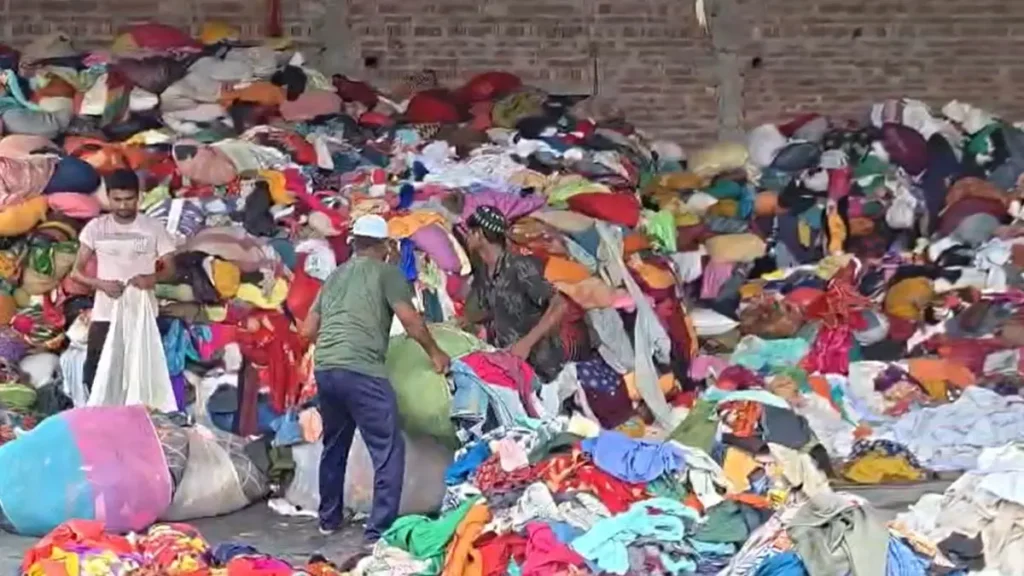
In the village of Moradabad, a unique narrative unfolds around the lives of its residents, where the act of recycling torn and old clothes has transformed into both a livelihood and an identity for thousands of families. This village, often overlooked, has earned a name for itself as a hub for the repurposing of discarded garments. The process begins with the collection of these old clothes, which are then meticulously sorted and processed. What might seem like mere waste to many is viewed as a treasure trove of potential by the villagers, who possess an extraordinary ability to breathe new life into what others have deemed worthless.
The transformation of these worn-out textiles is not just an economic activity; it plays a crucial role in the social fabric of the community. Many families rely on this industry for their daily sustenance, finding creative ways to stitch, patch, and weave old fabrics into new creations. From bags to quilts and other handmade products, the ingenuity of the villagers knows no bounds. This craft not only provides a source of income but also fosters a sense of pride and connection among the artisans, as each item carries a story—of its past life and the hands that have lovingly transformed it.
Moreover, the village of Moradabad has become a beacon of sustainability, promoting the idea of recycling and upcycling in a world increasingly driven by consumerism. By giving new purpose to discarded clothing, these families are actively participating in a movement that prioritizes environmental consciousness. Their work serves as a reminder of the importance of valuing resources and minimizing waste, encouraging others to reconsider their own consumption habits. As the village continues to thrive, it stands as a testament to resilience, creativity, and the power of community in the face of adversity. Through the reclamation of old clothes, Moradabad not only secures its economic future but also reinforces the significance of resourcefulness and sustainability in today’s world.