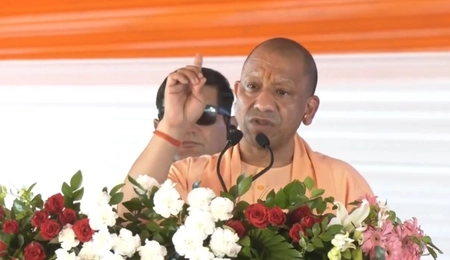
Uttar Pradesh Chief Minister Yogi Adityanath has launched a significant attack on the Samajwadi Party (SP) and the Congress party, questioning their actions and motives. He specifically condemned the incident where prayers were allegedly conducted on the steps of the Hanuman Garhi temple, a revered site for Hindus in Ayodhya. This act, according to Yogi, is a disrespectful and sacrilegious gesture that undermines the sanctity of the temple and the sentiments of the Hindu community. He emphasized that such actions are not just a matter of religious disrespect but also reflect a broader pattern of political maneuvering that seeks to undermine Hindu traditions and values.
During a public address, Yogi Adityanath expressed his concerns over the growing trend of appeasement politics, which he believes is being practiced by these opposition parties. He argued that the SP and Congress have consistently prioritized political gains over the cultural and religious sentiments of the people. By allowing or facilitating such acts, they are not only disrespecting Hindu beliefs but also alienating a significant portion of the electorate. Yogi’s comments highlight a critical perspective on the intersection of religion and politics in India, particularly in a state like Uttar Pradesh, where religious sentiments often play a pivotal role in shaping political narratives.
The Chief Minister’s remarks have sparked a debate on religious tolerance and the secular fabric of the nation. Critics argue that such statements can further deepen communal divides and foster an environment of hostility among different religious communities. However, supporters of Yogi Adityanath appreciate his strong stance on protecting Hindu cultural heritage and upholding the dignity of religious sites. This incident serves as a reminder of the delicate balance that political leaders must maintain in a diverse society, where multiple faiths coexist, and where the actions of one group can have far-reaching implications for communal harmony.
As the political landscape in Uttar Pradesh continues to evolve, the rhetoric surrounding religious practices and their place in public life will likely remain a focal point of discussion. The upcoming elections may see these themes being further amplified, as parties seek to consolidate their bases by appealing to religious sentiments. Yogi Adityanath’s comments reflect a strategic approach to rally Hindu voters while simultaneously challenging the narratives put forth by opposition parties.