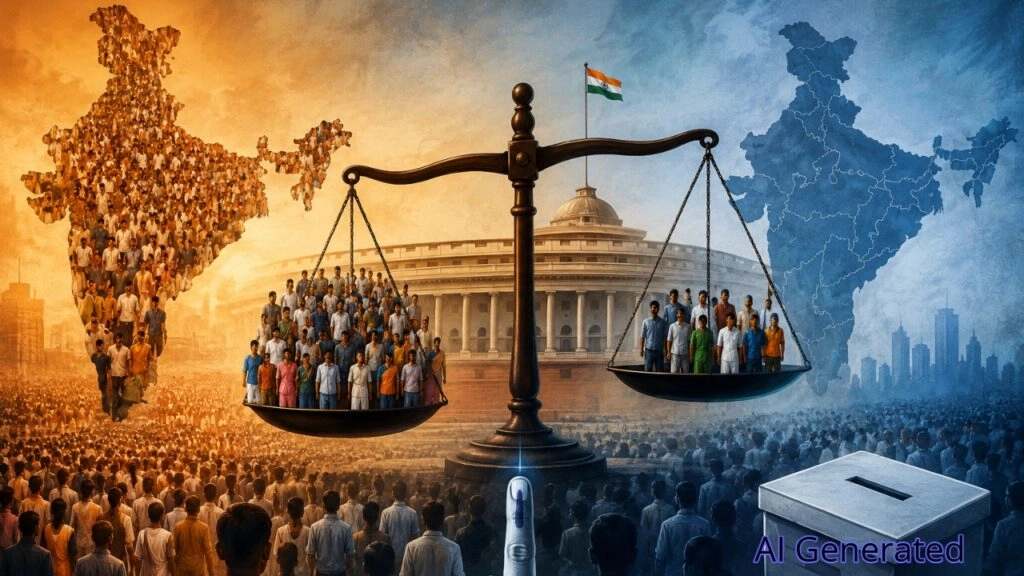
The discussion surrounding the caste census has gained significant prominence in the context of Indian politics, particularly as the 2029 elections approach. The central question revolves around whether a larger population in certain castes will lead to a greater share of political representation. This debate raises critical issues about how representation is determined in a diverse society, where caste-based identities often influence political dynamics. As various political parties advocate for a caste census, they argue that it could provide a clearer picture of demographic distributions and ensure that marginalized communities receive their fair share of political power and resources.
One of the key points of contention in this discourse is the potential conflict between representation and population. On one hand, proponents of a caste census argue that understanding the population dynamics among different caste groups is essential for equitable representation. They believe that a census will reveal the true social fabric of the nation, allowing for policies that are more inclusive and reflective of the needs of all communities. On the other hand, critics warn that emphasizing population size could lead to a system where political power is disproportionately allocated based on numbers rather than on principles of equality and justice.
As the elections draw nearer, the implications of the caste census will likely become a focal point in political campaigns. Parties may leverage the data to appeal to specific voter bases, arguing for increased representation for their respective communities. This could lead to a scenario where electoral strategies hinge on demographic calculations rather than on substantive policy discussions. The potential outcome is a political landscape where representation is fundamentally linked to numerical strength, raising questions about the essence of democracy and whether it can truly reflect the diverse voices within society.
The 2029 elections thus set the stage for a significant ideological battle: representation versus population. As parties navigate this complex terrain, the implications for governance and social cohesion could be profound. Ultimately, the outcome of this debate will not only shape the political landscape for years to come but will also influence the broader discourse on equity and inclusion in Indian society. As the nation grapples with these critical questions, it is essential to consider the values that should underpin representation and how best to achieve a balanced and just political framework.