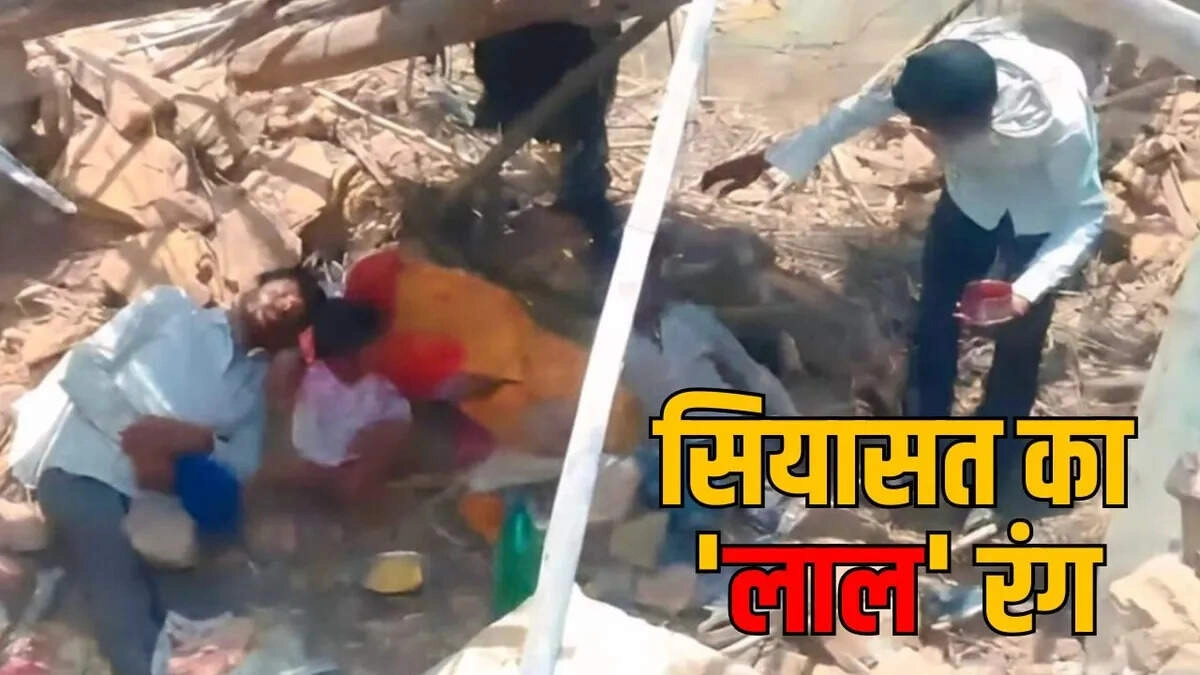
In a recent incident in Chhatarpur, a disturbing video has surfaced showing the devastation caused by bulldozers demolishing tribal homes. The footage, which has drawn significant attention, captures the anguish of the local residents as they document their plight. In the video, a family can be seen covered in blood, which has raised alarm among viewers and prompted various reactions from the community and officials alike. The emotional weight of the scenes portrayed in the video highlights the struggles faced by tribal families who are often marginalized and subjected to such violent actions.
Local authorities, including the Superintendent of Police (SP) and the Collector, responded to the outrage by downplaying the situation. They claimed that the blood seen in the video was not from any violent act but instead suggested it was paint or color, which has sparked further outrage among the villagers. This statement has not only been met with skepticism but has also aggravated the residents, who feel their suffering is being dismissed. The contrasting narratives between the local government and the affected villagers illustrate the deepening divide and mistrust in the region.
As the situation unfolds, it raises critical questions about the rights of indigenous populations and the responsibilities of the government towards them. The demolition of homes, especially under the pretext of development or urbanization, often leads to the displacement of vulnerable communities. The incident in Chhatarpur serves as a stark reminder of the ongoing struggles faced by tribal groups in India, as they fight to preserve their homes, culture, and way of life amid increasing pressures from development projects. The emotional and physical scars left by such events can have lasting impacts on these communities, highlighting the urgent need for a more humane approach to development that takes into consideration the voices and rights of indigenous peoples.