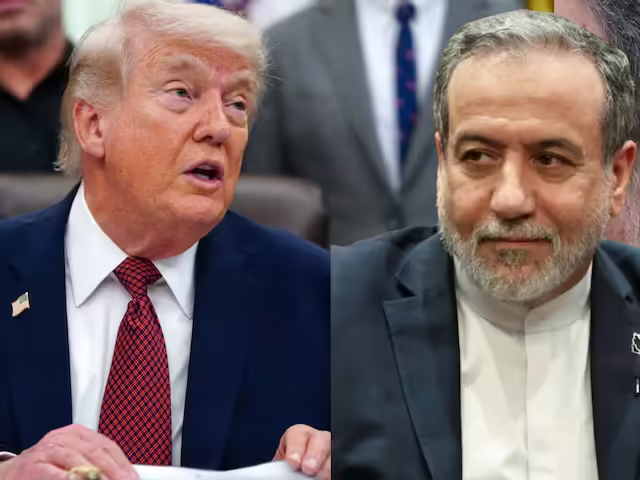
Former U.S. President Donald Trump expressed his outrage over the recent meeting between Iran and Russia. He has issued a stern warning, suggesting that if he were still in office, he would take drastic measures, including the destruction of oil pipelines. This statement underscores his strong stance against the collaboration between the two nations, which he views as a significant threat to U.S. interests and global stability.
Trump’s comments reflect his broader foreign policy perspective, where he has consistently emphasized the importance of countering adversarial alliances. The Iran-Russia meeting is seen as a potential step towards closer cooperation in various fields, including military and energy sectors, which could destabilize the region and undermine U.S. efforts to impose sanctions on Iran. The former president’s threats to target oil infrastructure highlight the lengths he would go to protect American interests and assert U.S. dominance in global energy markets.
The geopolitical implications of such a meeting are profound, as it could pave the way for increased collaboration between two nations often at odds with Western powers. Trump’s comments serve as a reminder of the contentious dynamics in international relations, particularly concerning energy resources, which remain a critical driver of global politics. His rhetoric may resonate with those who believe in a more aggressive stance against nations that challenge U.S. hegemony, raising questions about the future of U.S.-Iran and U.S.-Russia relations in an increasingly multipolar world.