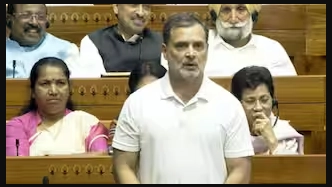
Rahul Gandhi has recently criticized Prime Minister Narendra Modi, accusing him of using the issue of women’s rights as a shield to deflect attention from the government’s shortcomings. During his remarks, Gandhi emphasized that Modi is “hiding behind India’s women,” suggesting that the Prime Minister is not taking meaningful action to empower women but instead leveraging their issues for political gain. This assertion reflects a growing frustration among opposition leaders who feel that the government is not genuinely committed to advancing women’s rights and representation in the political sphere.
In light of these accusations, opposition parties are calling for a separation of the women’s reservation bill from the delimitation process. The delimitation process, which involves redrawing electoral boundaries, has been a contentious topic, with critics arguing that it could undermine the intended benefits of the women’s quota. By linking the two issues, the opposition claims that the government is stalling progress on the women’s reservation bill, which aims to ensure that women have a more substantial presence in legislative bodies.
The demand for delinking the women’s quota from delimitation is gaining traction, as opposition leaders argue that women deserve to have their representation secured independently of any electoral boundary changes. This move is seen as crucial for promoting gender equality in politics, especially in a country where women have historically been underrepresented. The opposition believes that by prioritizing the women’s quota, they can create a more inclusive political landscape that reflects the diverse voices of the Indian populace.
As the debate continues, it is evident that the issue of women’s rights and representation is at the forefront of political discourse in India. The opposition’s push for a standalone women’s reservation bill highlights the urgency and importance of addressing gender disparities in governance. With growing awareness and activism around women’s issues, the demand for genuine representation and empowerment is likely to resonate with a broad spectrum of the electorate, potentially influencing future political dynamics in the country.