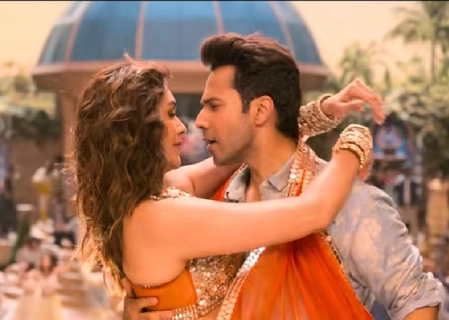
The phrase “है जवानी तो इश्क होना है” translates to “If you are young, you must fall in love.” This sentiment captures the essence of youth and its inherent passion for love and relationships. It reflects a universal theme that resonates with many, especially in the context of Bollywood films, where love stories often take center stage. The idea that youth inevitably leads to romance is a notion that filmmakers have explored for decades, and it continues to hold relevance in contemporary cinema.
In this context, we see the mention of a “गिफ्ट पुराना लेकिन पैकेजिंग नई,” or “an old gift but with new packaging.” This could refer to the way classic themes and narratives are often reimagined in modern cinema. While the core of a love story may remain timeless, the presentation, style, and execution can vary significantly, appealing to new generations of audiences. This brings us to the comparison between two prominent actors, Govinda and Varun Dhawan. Govinda, a legendary figure in Bollywood, is known for his unique style of comedy and romance, which has left an indelible mark on the industry.
As Varun Dhawan steps into this realm, the question arises: Can he surpass the legacy of Govinda? Varun has carved out his niche in the industry with his own charm and acting prowess, but he faces the challenge of meeting the high expectations set by the earlier generation. In many ways, Varun represents the evolution of Bollywood itself, adapting to contemporary sensibilities while still paying homage to the classics. The anticipation surrounding his performances often leads audiences to draw parallels with the greats, making it a fascinating exploration of how new actors interpret and innovate upon established themes.
Ultimately, the intersection of youth, love, and the legacy of past actors creates a rich tapestry that continues to evolve in Indian cinema. Whether Varun Dhawan can indeed beat the iconic Govinda remains to be seen, but what is clear is that the dialogue between the old and the new will always be a vital part of Bollywood’s narrative landscape. As audiences, we are invited to witness this ongoing transformation, celebrating both the nostalgia of the past and the excitement of the present.