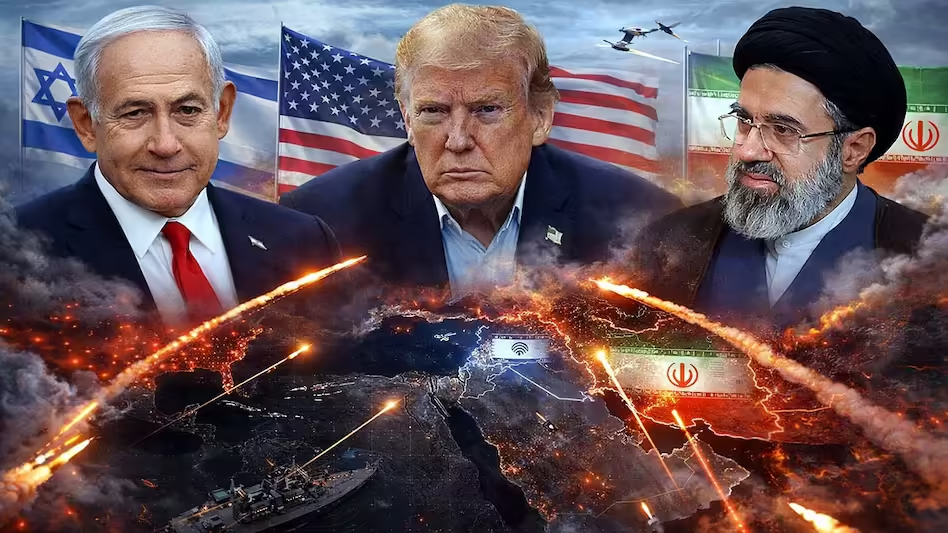
Has America prepared to avoid war by yielding to Iran? Twelve signs from Trump reveal hidden truths.
In recent months, the geopolitical landscape has shifted significantly, prompting questions about the United States’ approach to Iran. Many analysts suggest that the U.S. may be softening its stance in an effort to avert potential conflict. The signs are subtle yet telling, particularly in the context of former President Donald Trump’s statements and actions. These indicators may suggest a strategic pivot away from confrontation and towards diplomacy.
Trump’s rhetoric has often been characterized by its unpredictability, but a closer examination reveals a pattern that could signal a desire to de-escalate tensions with Iran. For instance, his comments regarding military interventions, as well as his willingness to engage in dialogue, hint at a reconsideration of aggressive policies that have defined U.S. foreign relations in the past. Furthermore, Trump’s focus on domestic issues and the need for economic stability may also play a role in his approach to Iran, as a prolonged conflict could have dire consequences for the American economy.
Moreover, the interplay between international alliances and the shifting dynamics in the Middle East cannot be overlooked. The U.S. has traditionally relied on its relationships with regional partners to counter Iran’s influence, but recent developments suggest a growing recognition that a more collaborative approach may yield better results. Trump’s potential willingness to engage with Iran could pave the way for a more stable and peaceful resolution to longstanding tensions, ultimately benefiting both nations and the broader international community. As the world watches closely, the coming months will likely reveal whether these signs lead to a meaningful shift in U.S.-Iran relations or if the specter of conflict remains ever-present.