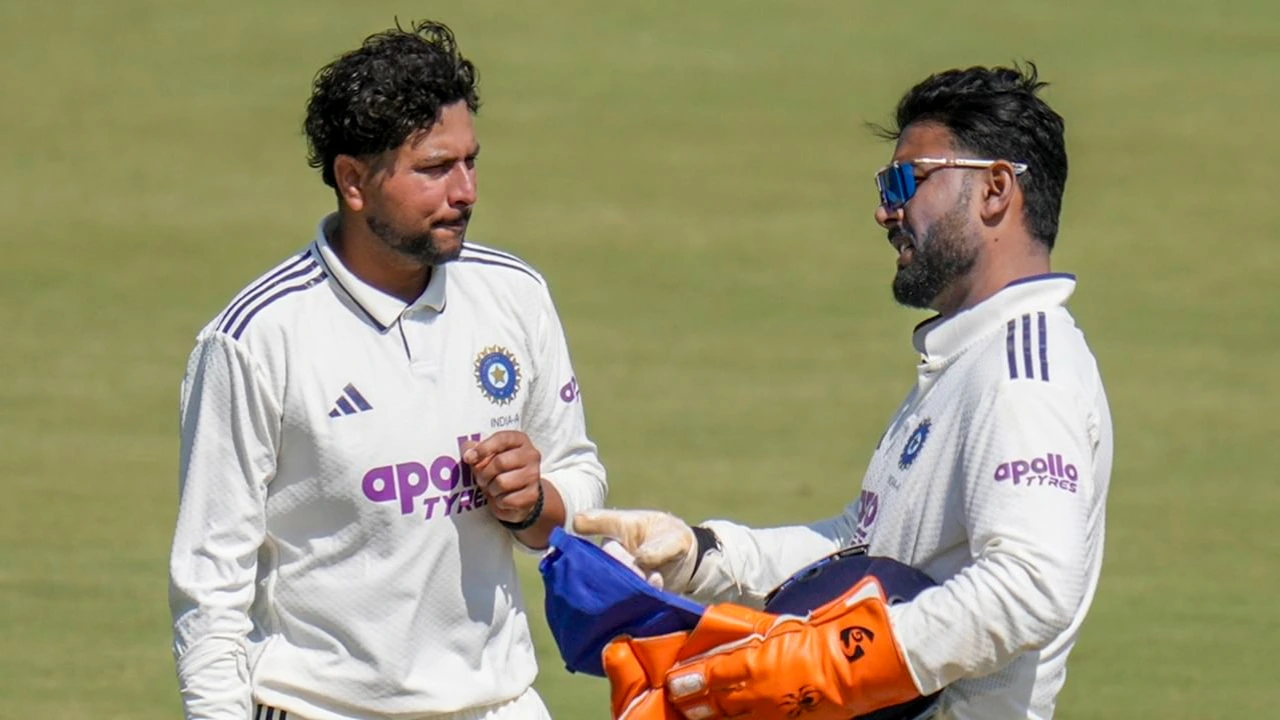
In a recent incident that unfolded during a cricket match in Guwahati, Rishabh Pant took a strong stance against his teammate Kuldeep Yadav for what he perceived as a lack of respect towards Test cricket. The event, which has sparked considerable debate among fans and analysts alike, showcased the intense emotions and camaraderie that often exist within a team environment. Pant, known for his fiery spirit and passion for the game, did not hold back in expressing his disappointment over Kuldeep’s casual approach during a crucial Test match.
The term “belt treatment” colloquially refers to a reprimand or a stern talking-to, often in a lighthearted or joking manner among teammates. In this case, Pant’s actions were indicative of his deep commitment to the traditional format of cricket, which is often regarded as the purest form of the game. Test cricket, with its rich history and strategic nuances, requires players to exhibit both skill and mental fortitude. Pant’s reaction highlights the importance of maintaining the integrity of this format and the expectations that come with representing the national team.
Kuldeep Yadav, a talented spinner, may not have realized the implications of his actions, which were perceived as dismissive of the values that Test cricket embodies. This incident serves as a reminder of the responsibility that players carry, not only towards their performance but also in upholding the spirit of the game. While this exchange may have been intended as a friendly jibe, it underscores a larger conversation about the evolution of cricket and the respect it commands from its players.
The cricketing community has a vested interest in how such interactions unfold, as they reflect the dynamics within a team and the ongoing struggle to balance modern cricket’s demands with traditional values. Rishabh Pant’s passionate defense of Test cricket could inspire a broader movement among players to honor the game’s legacy, ensuring that future generations continue to appreciate the depth and challenge that comes with the longer format. Ultimately, this incident is not just about one player’s actions; it is a reflection of the collective ethos that players must cultivate as they navigate the evolving landscape of cricket.