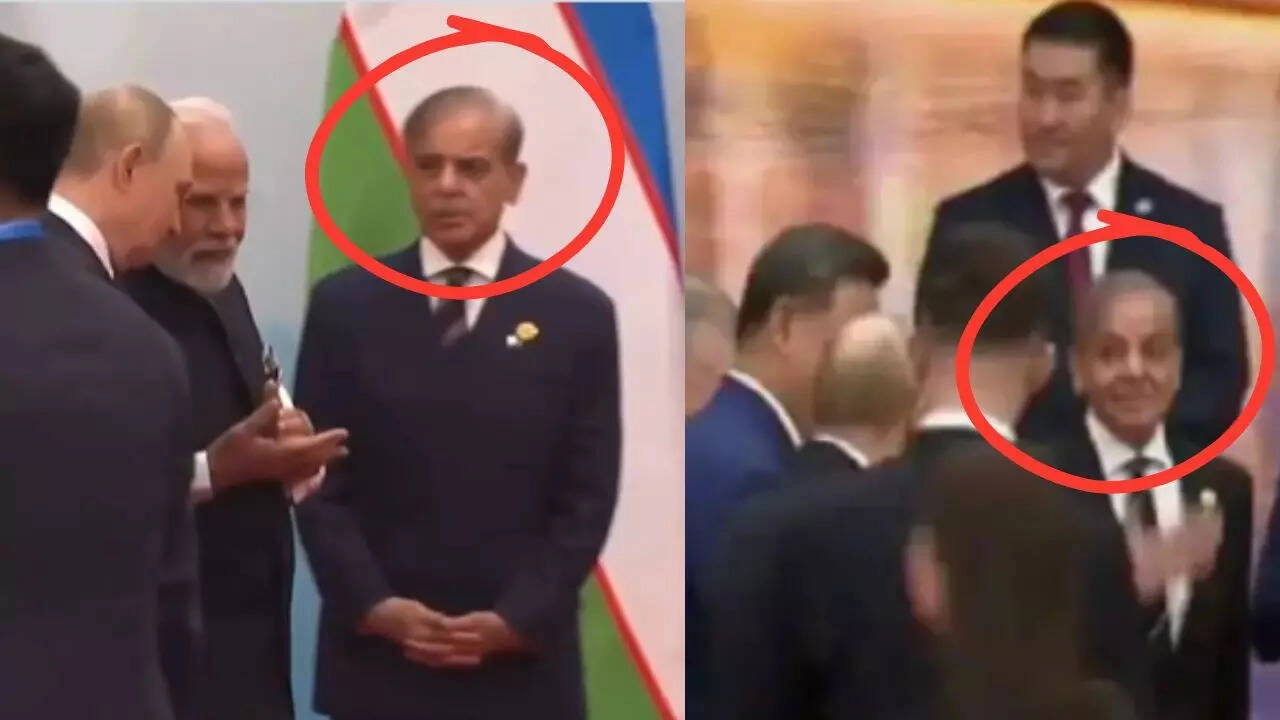
A video has gone viral showcasing the international embarrassment faced by Pakistan’s Prime Minister Shahbaz Sharif during a recent event. In the footage, it becomes evident that Sharif is attempting to engage in a conversation with Russian President Vladimir Putin. However, what unfolds is a moment that many are interpreting as a significant snub. Despite Sharif’s efforts to initiate dialogue, Putin seemingly ignores him, continuing with his own discussions and activities, which has raised eyebrows and sparked discussions across social media platforms.
This incident highlights not only the challenges faced by Pakistan’s leadership on the global stage but also underscores the delicate nature of international diplomacy. The optics of a world leader being overlooked by another, especially within the context of a high-profile meeting, can have far-reaching implications for a country’s standing in international relations. Observers have noted that such moments can be detrimental to a nation’s image, especially when the leadership is striving to bolster its influence and seek partnerships on various fronts, including economic and security alliances.
The viral nature of the video has led to widespread commentary and analysis, with political analysts weighing in on what this could mean for Pakistan’s foreign policy and its ongoing efforts to strengthen ties with other nations, particularly in light of the complex geopolitical landscape. Critics argue that moments like these reveal a lack of respect or recognition for Pakistan’s position on the world stage, while supporters of the Prime Minister are calling for a more nuanced understanding of international relations, emphasizing that such incidents are not uncommon in the realm of global politics.
In conclusion, the viral video serves as a reminder of the intricate and often unpredictable nature of diplomatic interactions. As Pakistan navigates its international relationships, the way leaders are perceived and treated in these high-stakes environments will undoubtedly continue to play a crucial role in shaping the country’s foreign policy and international standing.