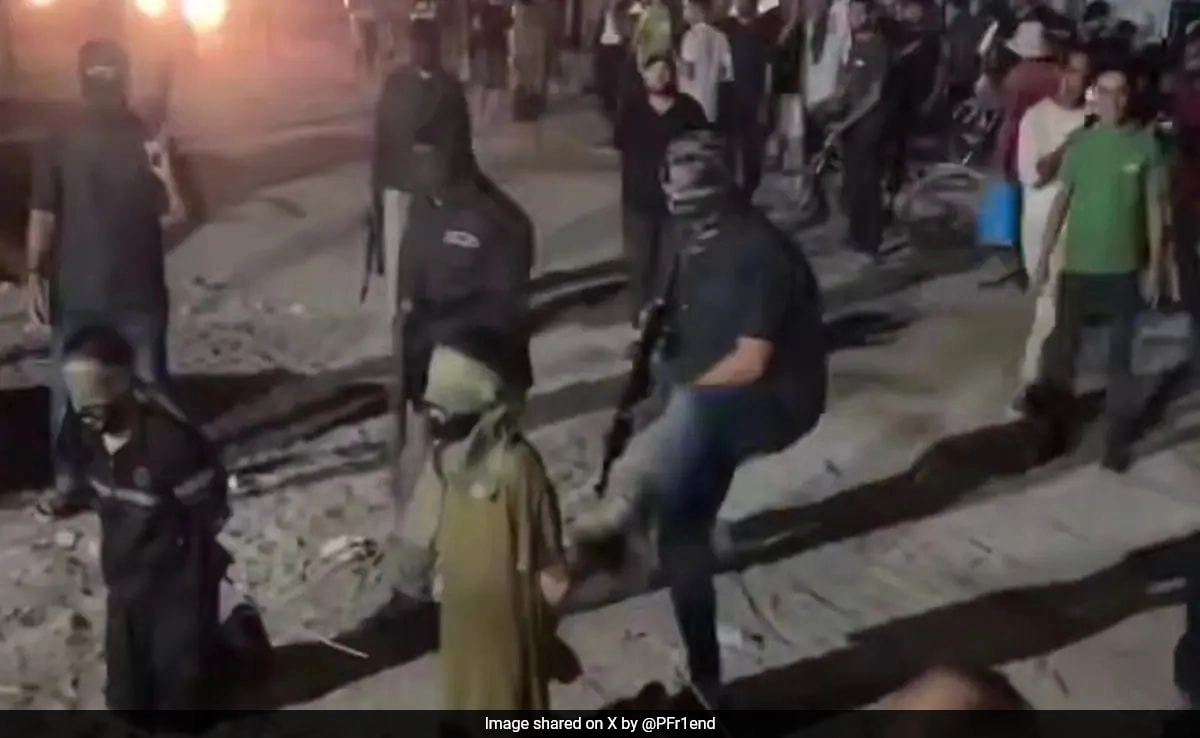
In a harrowing video that has emerged from Gaza, the chilling moments leading up to the public execution of three individuals accused of collaborating with Israel have been captured. The footage reveals a deeply unsettling scene where the atmosphere is charged with tension and fear. The Hamas gunmen, dressed in military attire, are seen confronting the accused, who are visibly distressed and aware of the grim fate awaiting them. This stark display of power serves as a brutal reminder of the severe consequences faced by those deemed traitors in a conflict that has historically been marked by intense violence and retribution.
The executions are framed within the broader context of the ongoing conflict between Hamas and Israel, a struggle characterized by mutual distrust and animosity. The act of publicly executing individuals accused of collaboration is not only a method of punishment but also a strategic message to the population. Hamas seeks to reinforce its authority and discourage any potential dissent or cooperation with Israeli forces. Such displays are designed to instill fear in the hearts of the public, ensuring that any thoughts of collaboration are met with dire repercussions. This approach highlights the lengths to which militant groups will go to maintain control and assert their dominance in a region fraught with turmoil.
As the video circulates, it raises profound ethical questions about the nature of justice in conflict zones. The accused, who faced a swift and brutal end, did not receive a fair trial or any semblance of due process. The public execution serves as a grim reminder of the brutal realities of war, where the lines between justice and vengeance often become blurred. It also underscores the plight of civilians caught in the crossfire, who live under constant threat of violence and retribution, whether from governmental forces or militant groups. The psychological impact on the community is profound, as fear permeates daily life, driving individuals to make choices that may endanger their safety.
In the wake of such incidents, the international community is often called upon to respond, yet geopolitical complexities frequently hinder effective intervention. The situation in Gaza remains a contentious issue, with various perspectives on the legitimacy of Hamas’s actions versus the broader implications of Israeli policies. The video serves as a stark illustration of the ongoing cycle of violence that defines the region, prompting urgent discussions on how to break this cycle and foster a more peaceful coexistence. As the world watches, the need for dialogue and understanding becomes increasingly critical, highlighting the importance of addressing the root causes of conflict rather than merely reacting to its symptoms.