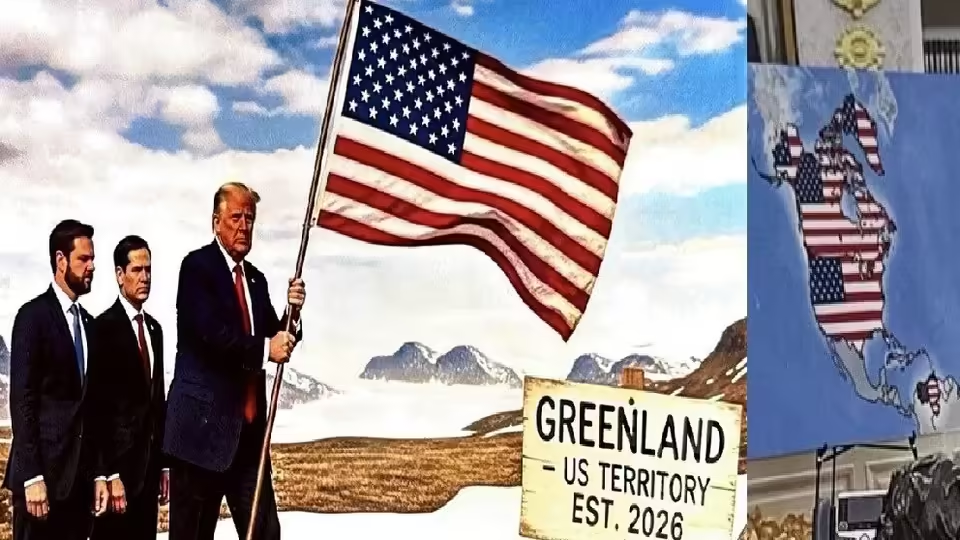
In a surprising turn of events, former President Donald Trump’s administration shifted its strategy regarding Greenland, an autonomous territory of Denmark. Initially, Trump expressed a keen interest in purchasing Greenland, viewing it as a strategic asset due to its vast natural resources and geographical location. This interest was met with skepticism and outright rejection from the Danish government, which emphasized that Greenland was not for sale. This rejection, however, did not deter Trump’s ambitions, as he continued to promote the idea of enhancing U.S. influence in the Arctic region.
The shift in America’s strategy towards Greenland came after the administration issued threats of tariffs against Denmark. Such a move was seen as an attempt to leverage economic pressure to gain concessions regarding Greenland. The imposition of tariffs would have had significant implications for Denmark’s economy, and many analysts interpreted this as an aggressive negotiating tactic. The geopolitical significance of Greenland cannot be understated, especially in the context of increasing competition in the Arctic, where melting ice is opening new shipping routes and access to untapped resources.
As tensions escalated, the U.S. sought to recalibrate its approach. The focus shifted towards fostering stronger diplomatic ties with Denmark and Greenland rather than pursuing outright acquisition. This strategic pivot highlighted a recognition of the importance of collaboration in addressing shared challenges, such as climate change and security concerns in the Arctic. By adopting a more diplomatic stance, the U.S. aimed to maintain its influence in the region while respecting the sovereignty of Denmark and Greenland.
In summary, the abrupt change in America’s strategy regarding Greenland reflects a complex interplay of geopolitical interests, economic pressures, and diplomatic relations. The initial ambition to acquire the territory was tempered by the realization that fostering partnerships would ultimately serve U.S. interests more effectively. As the Arctic continues to gain importance on the global stage, it remains crucial for the U.S. to navigate these relationships carefully, balancing assertiveness with collaboration to secure its position in this strategically vital region.