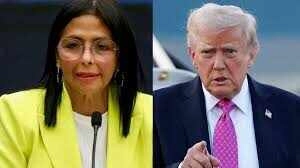
Former U.S. President Donald Trump recently issued a stark warning to Venezuela’s interim president, Juan Guaidó, stating that if his advice is not heeded, the consequences could be severe, potentially even worse than the current situation under President Nicolás Maduro. This statement reflects the ongoing tensions between the United States and the Venezuelan government, particularly concerning the political crisis that has engulfed the country for several years. The U.S. has been a vocal supporter of Guaidó, who declared himself the interim president in early 2019, seeking to oust Maduro, whom many consider to be an illegitimate leader due to allegations of electoral fraud and human rights abuses.
Trump’s comments, delivered in a video message, highlight the urgency he feels regarding the political climate in Venezuela. He emphasized that the U.S. stands firmly behind Guaidó and that any failure to align with American interests could lead to dire repercussions. This rhetoric underscores the broader strategy of the U.S. in Latin America, where it has historically sought to influence political outcomes and promote regimes that align with its democratic and economic ideals. The implications of such statements can be profound, potentially escalating tensions in an already volatile region and impacting the lives of millions of Venezuelans who are grappling with economic hardships and political oppression.
As the situation in Venezuela continues to evolve, the international community watches closely. The U.S. has imposed sanctions on Maduro and his government, aiming to pressure them into relinquishing power. Guaidó’s position has been precarious, facing challenges both from within the country and from external forces. Trump’s threats suggest a willingness to escalate the U.S. response if Guaidó’s leadership is not respected, which raises questions about the future of U.S.-Venezuela relations and the potential for a more aggressive American involvement in the region. The ongoing struggle for power in Venezuela remains a focal point of international diplomacy, as various nations take sides in this complex geopolitical crisis.