
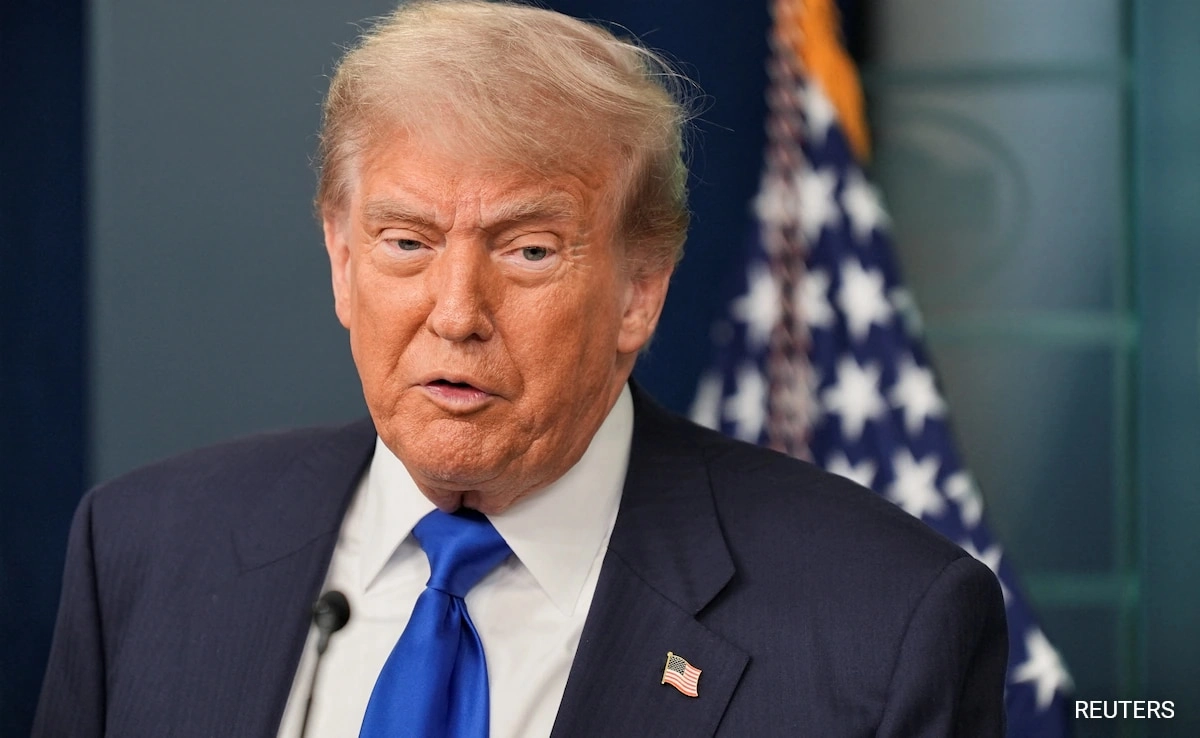
In a significant move that has the potential to reshape international trade dynamics, former President Donald Trump recently announced the imposition of a 25% tariff on goods imported from India. This decision comes at a time of growing economic tensions between the United States and various countries, as the Trump administration continues to prioritize American industry and workers. The tariff is part of a broader strategy aimed at addressing what Trump describes as unfair trade practices and imbalances that have long affected the U.S. economy. By targeting India, one of the largest economies in Asia, the former president appears to be signaling a shift in U.S. trade policy that could reverberate across multiple sectors.
During a press conference following the announcement, Trump stated, “We’re talking to India now,” highlighting his administration’s willingness to engage in negotiations to resolve trade disputes. This dialogue could lead to a reevaluation of existing trade agreements and an exploration of new terms that benefit American businesses. Trump’s administration has consistently advocated for a more protectionist approach, arguing that it is essential to safeguard American jobs and industries from foreign competition. The imposition of tariffs is seen as a tool to incentivize domestic production and reduce reliance on imports, particularly from countries that have been perceived as taking advantage of the U.S. market.
The impact of the 25% tariff on India could be far-reaching, affecting a wide range of goods, including textiles, electronics, and agricultural products. Indian exporters may face increased costs, which could lead to higher prices for American consumers. However, this move may also create opportunities for domestic producers to fill the gap left by reduced imports. Economic analysts are closely monitoring the situation, as the potential for retaliatory measures from India could escalate tensions further. India’s response will be crucial in determining the future of U.S.-India trade relations, as both countries navigate the complexities of globalization and economic interdependence.
As the world watches these developments unfold, it remains to be seen how this tariff will affect the broader geopolitical landscape. The U.S.-India relationship has historically been characterized by strategic cooperation, but trade disputes could complicate this partnership. The potential for increased tariffs and trade barriers could lead to a rethinking of alliances and economic strategies on both sides. Ultimately, the decision to impose a 25% tariff reflects a significant moment in U.S. trade policy, one that emphasizes a return to America-first principles while also raising questions about the long-term implications for international trade and cooperation.


