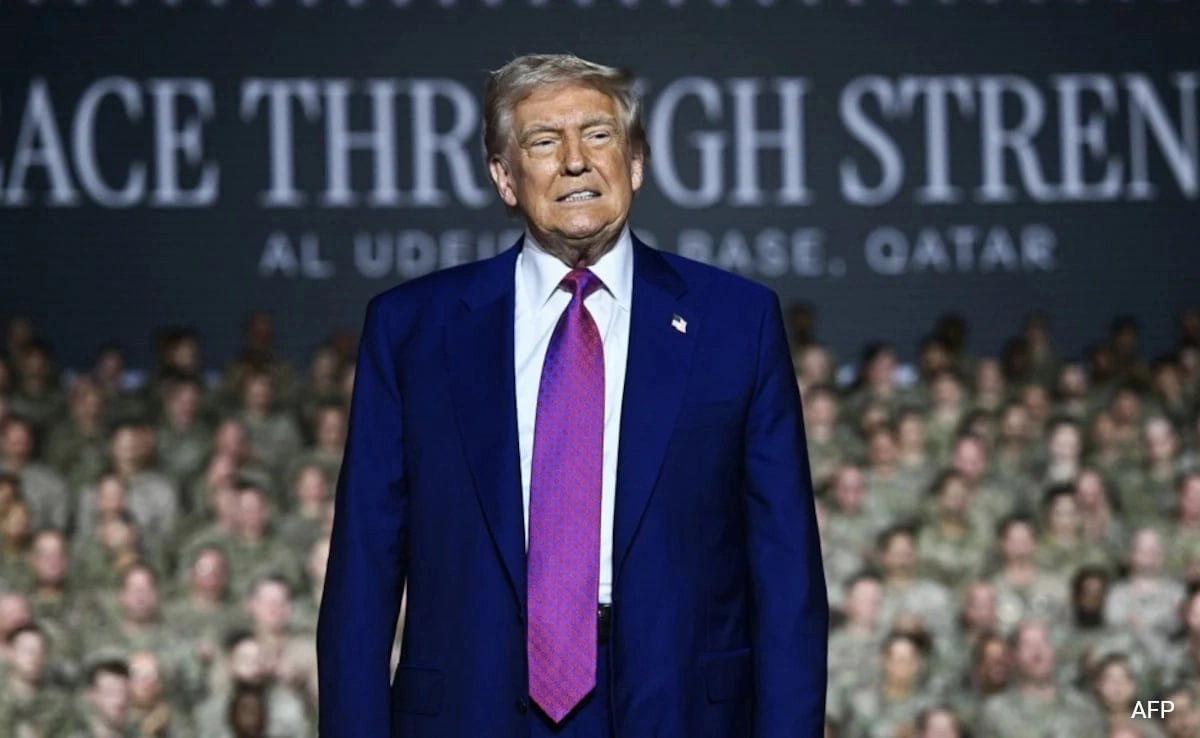
Former President Donald Trump expressed optimism regarding the ongoing ceasefire between Israel and Iran, suggesting that it could last “forever.” This statement comes amidst a backdrop of persistent tensions and military exchanges between the two nations, raising questions about the sustainability of such a truce. The recent developments have highlighted the complexity of the geopolitical landscape in the Middle East, where historical animosities and strategic interests often collide.
Despite Trump’s hopeful outlook, the reality on the ground paints a different picture. Attacks and counterattacks have continued, challenging the notion of a lasting peace. Analysts have pointed out that while a ceasefire might temporarily halt hostilities, the underlying issues that fuel the conflict—such as territorial disputes, political ideologies, and regional power dynamics—remain unresolved. The fragile peace is susceptible to collapse at any moment, particularly given the volatile nature of relations between Israel and Iran.
Moreover, Trump’s comments reflect a broader political narrative in the United States, where foreign policy decisions are often influenced by domestic considerations. His stance on the Israel-Iran conflict may resonate with certain voter bases that prioritize strong support for Israel, yet it also invites criticism from those who view such optimism as overly simplistic. As the situation continues to evolve, the global community watches closely, aware that any misstep could reignite hostilities and further destabilize the region. The hope for a lasting ceasefire, while appealing, must grapple with the harsh realities of ongoing aggression and the complex web of alliances and enmities that define the Middle East.