
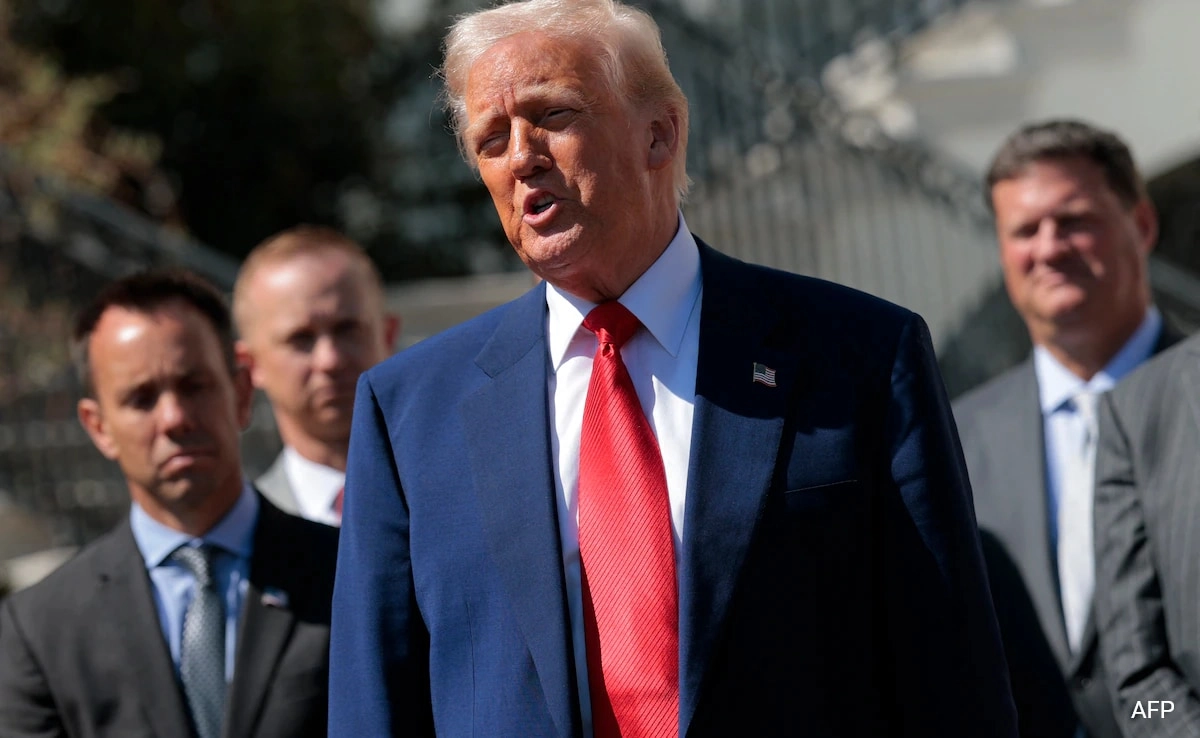
Former President Donald Trump has taken a strong stance against Harvard University, labeling the prestigious institution as a “joke” and asserting that it should no longer receive federal funding. His remarks reflect a broader critique of elite universities, which he believes have strayed from their foundational principles and are no longer serving the best interests of American society. Trump’s comments come amid ongoing debates about the role of higher education in shaping political and cultural discourse in the United States.
Trump’s criticism of Harvard is fueled by his perception that the university promotes a liberal agenda that contradicts traditional American values. He argues that instead of fostering a diverse range of viewpoints, institutions like Harvard have become echo chambers for progressive ideologies. This, he contends, stifles free speech and limits the intellectual diversity that is essential for a healthy academic environment. By advocating for the withdrawal of federal funding, Trump seeks to hold universities accountable for what he views as their failure to provide a balanced education and to serve the public good.
The issue of federal funding for universities has been a contentious topic in American politics. Critics argue that taxpayer money should not support institutions that they believe are out of touch with the general populace or that prioritize political correctness over academic freedom. Trump’s call to withdraw support from Harvard resonates with a segment of the electorate that feels disenfranchised by elite institutions which they see as perpetuating social and economic inequalities. This sentiment underscores a growing divide in the U.S. regarding the role of higher education and its impact on society.
Ultimately, Trump’s assertion that Harvard should no longer receive federal funds raises important questions about the relationship between government and higher education. As the debate continues, it is clear that the future of funding for universities will be a significant issue in the political landscape. Stakeholders from all sides will need to engage in a thoughtful dialogue to address the concerns surrounding academic freedom, the role of federal funding, and the responsibilities of educational institutions to serve all members of society, rather than a select few.


