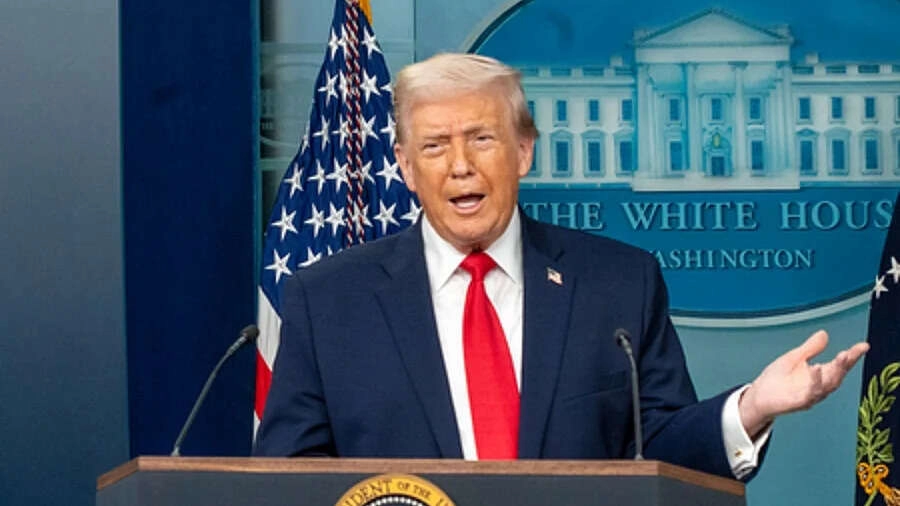
Former President Donald Trump made headlines with his controversial claim regarding Greenland, suggesting that the United States should consider acquiring the territory. In footage from a recent speech, Trump emphasized the strategic significance of Greenland, asserting that only America could ensure its security and stability. This statement reflects his long-standing interest in the region, which he previously expressed during his presidency in 2019 when he proposed the idea of purchasing Greenland from Denmark.
In his remarks, Trump not only reiterated his views on Greenland but also took the opportunity to criticize Europe. He argued that the continent has relied too heavily on American support for its defense and security needs, suggesting that the U.S. should take a more assertive stance in global geopolitics. This perspective aligns with Trump’s “America First” policy, which prioritizes American interests in international relations and often questions the value of long-standing alliances.
Trump’s comments sparked a renewed debate about U.S. foreign policy and its role in global security. Critics argue that such statements undermine diplomatic relations and may provoke tensions with European allies who feel marginalized by Trump’s approach. Furthermore, his focus on Greenland raises questions about resource competition in the Arctic region, where climate change has made previously inaccessible areas more available for exploration and potential exploitation.
Overall, Trump’s assertions reflect a broader trend in American politics where national security and territorial claims are increasingly framed within the context of competition with other global powers. As discussions around Greenland and U.S.-Europe relations continue, the implications of Trump’s stance will likely resonate in future diplomatic engagements and geopolitical strategies.