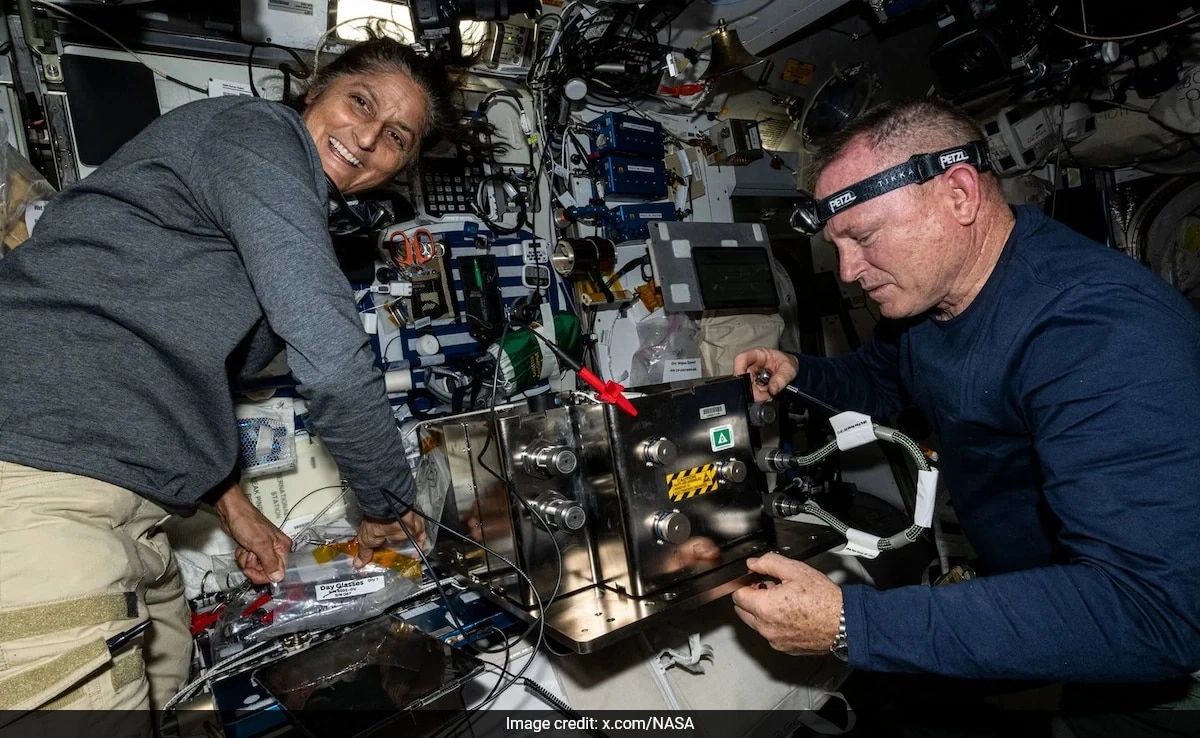
The exploration of space has always captivated humanity, not only for the wonders it reveals but also for the scientific advancements it encourages. Among the many astronauts who have contributed to our understanding of life beyond our planet, Sunita Williams and Butch Wilmore stand out for their remarkable experiments involving the growth of plants in microgravity. One of the most notable of these experiments focuses on the growth of lettuce, a seemingly simple vegetable that offers profound insights into the challenges of cultivating food in space. By studying how plants adapt to the unique conditions of microgravity, scientists are laying the groundwork for sustainable life support systems for future long-duration missions to destinations like Mars.
Sunita Williams, a veteran astronaut with multiple spaceflights under her belt, has played a pivotal role in this research. During her time aboard the International Space Station (ISS), she participated in growing different varieties of lettuce, which was not only a source of fresh food but also a significant experiment in understanding plant biology in space. The process of growing lettuce involved carefully monitoring light, water, and nutrient levels, as well as observing the growth patterns of the plants in the absence of gravity. This work is crucial, as it helps researchers determine how to grow nutritious food in environments where traditional farming methods are not feasible.
Butch Wilmore, another experienced astronaut, contributed to this important research by conducting experiments that focused on the nutritional values of the plants grown in space. The findings from these experiments have implications beyond just the immediate health of astronauts; they offer insights into how plants can be engineered to retain their nutrients even when grown in less-than-ideal conditions. This knowledge is invaluable not only for space exploration but also for addressing food security challenges on Earth, especially in regions where agricultural conditions are poor.
The experiments conducted by Williams and Wilmore signify a step towards establishing a sustainable ecosystem in space. As humanity looks toward future missions to Mars and beyond, understanding how to grow food in microgravity will be essential for supporting long-term human presence on other planets. The research not only highlights the adaptability of life but also underscores the potential for using technology and science to solve pressing challenges, whether in space or on Earth. By unlocking the secrets of plant growth in space, we are not only preparing for the next frontier of exploration but also enhancing our capacity to nourish ourselves on our home planet.