
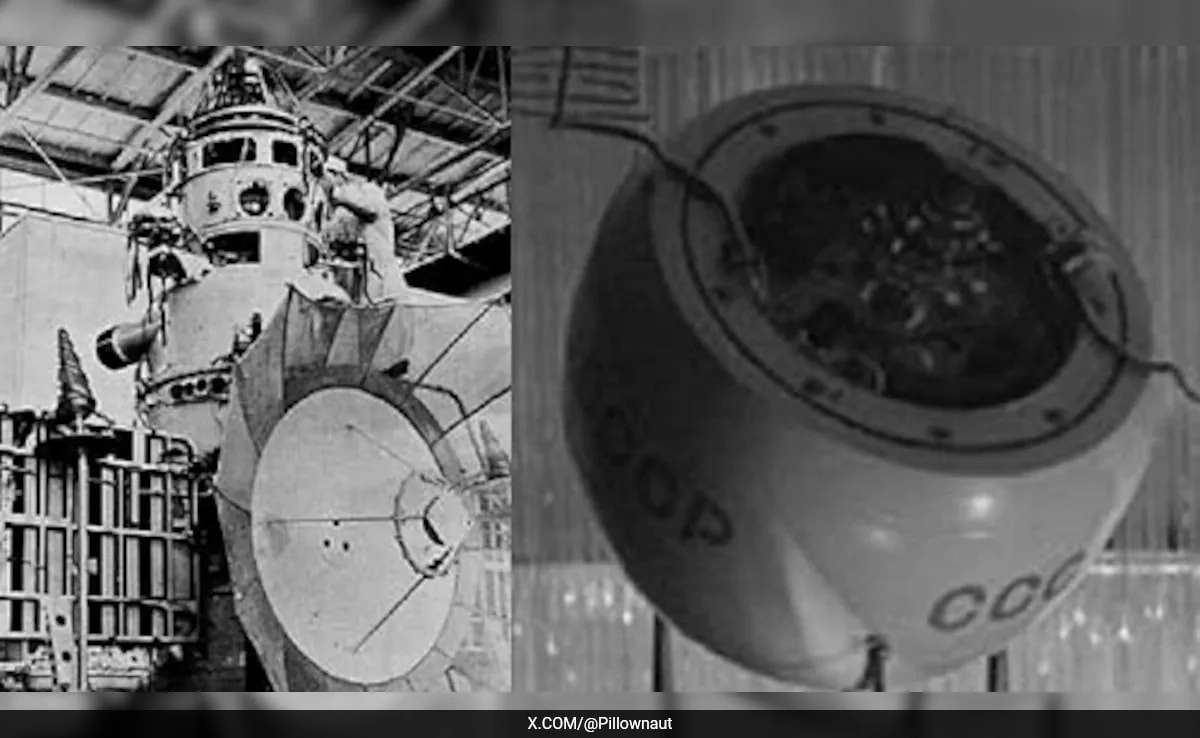
On a fateful day marked by historical significance, the Soviet-era spacecraft Kosmos 482 made an unexpected re-entry into Earth’s atmosphere, ultimately crashing near a remote area. Launched in April 1972, Kosmos 482 was originally intended for a variety of missions, including scientific research and technology testing. Its operational life, however, came to an end, leading to its eventual descent back to the planet. The re-entry of such spacecraft is often a point of concern due to the potential hazards associated with falling debris and the unpredictability of their trajectories.
The crash site, located in an uninhabited region, fortunately minimized the risk to human life and property. Authorities quickly mobilized to assess the situation, ensuring that no immediate dangers were posed to local communities. Experts in aerospace and space debris management were called upon to analyze the remnants of Kosmos 482, shedding light on its structural integrity and the materials used in its construction. This incident reignited discussions about the management of space debris and the growing concern surrounding the increasing number of defunct satellites and spacecraft orbiting the Earth.
Kosmos 482’s legacy continues to resonate beyond its operational lifespan, serving as a reminder of the achievements and challenges of the space race during the Cold War era. As nations continue to launch new missions into space, the lessons learned from past incidents like this one are vital for ensuring the safety and sustainability of space exploration. The incident also highlights the need for international cooperation in tracking and managing space debris, as the risks associated with uncontrolled re-entries become more pronounced with each passing year. As we gaze toward the stars, it becomes imperative to balance our ambitions with the responsibility of preserving the environment both in space and on Earth.


