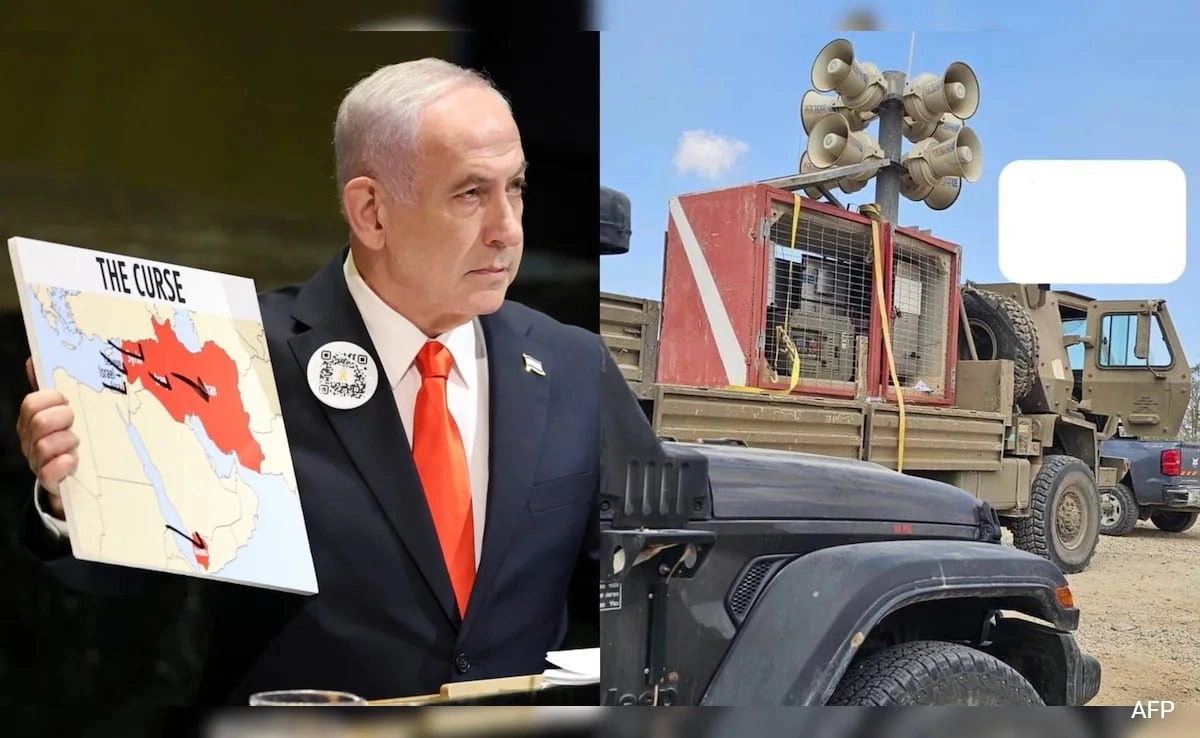
The Israeli Army has taken a significant step in utilizing technology to influence public perception and communication within Gaza by gaining control over local phone networks. This unprecedented move was aimed at streaming Prime Minister Benjamin Netanyahu’s speech at the United Nations, thereby ensuring that the message reaches a wider audience amid the ongoing conflict. By leveraging communication channels in this manner, the Israeli military seeks to counter narratives that may be unfavorable to its position and bolster support for its actions in the region.
The decision to stream Netanyahu’s speech directly to Gaza’s phones reflects a broader strategy employed by the Israeli government to communicate its stance and objectives during a time of heightened tensions. The speech itself is expected to address key issues surrounding Israel’s security, the ongoing conflict with Hamas, and the need for international support. By taking control of phone networks, the Israeli Army not only aims to disseminate information but also to reinforce its narrative in a territory where access to alternative viewpoints is often restricted.
This tactic raises questions about the implications of military control over civilian communication systems, especially in conflict zones. It highlights the intersection of technology and warfare, where information becomes a weapon in its own right. Critics may argue that such actions infringe on the rights of the citizens in Gaza, who may not have the opportunity to engage with diverse perspectives or counterarguments. As the situation unfolds, it remains to be seen how this approach will impact the dynamics of the conflict and the perceptions of both Israeli and Palestinian citizens.
Overall, the Israeli Army’s decision to stream Netanyahu’s UN speech directly to Gaza’s phone networks represents a significant escalation in the use of technological means to influence public discourse in conflict areas. This move underscores the importance of communication in modern warfare, where the battle for hearts and minds can be as crucial as physical confrontations. As the Israeli-Palestinian conflict continues to evolve, the role of information dissemination will undoubtedly play a critical role in shaping the future of the region.