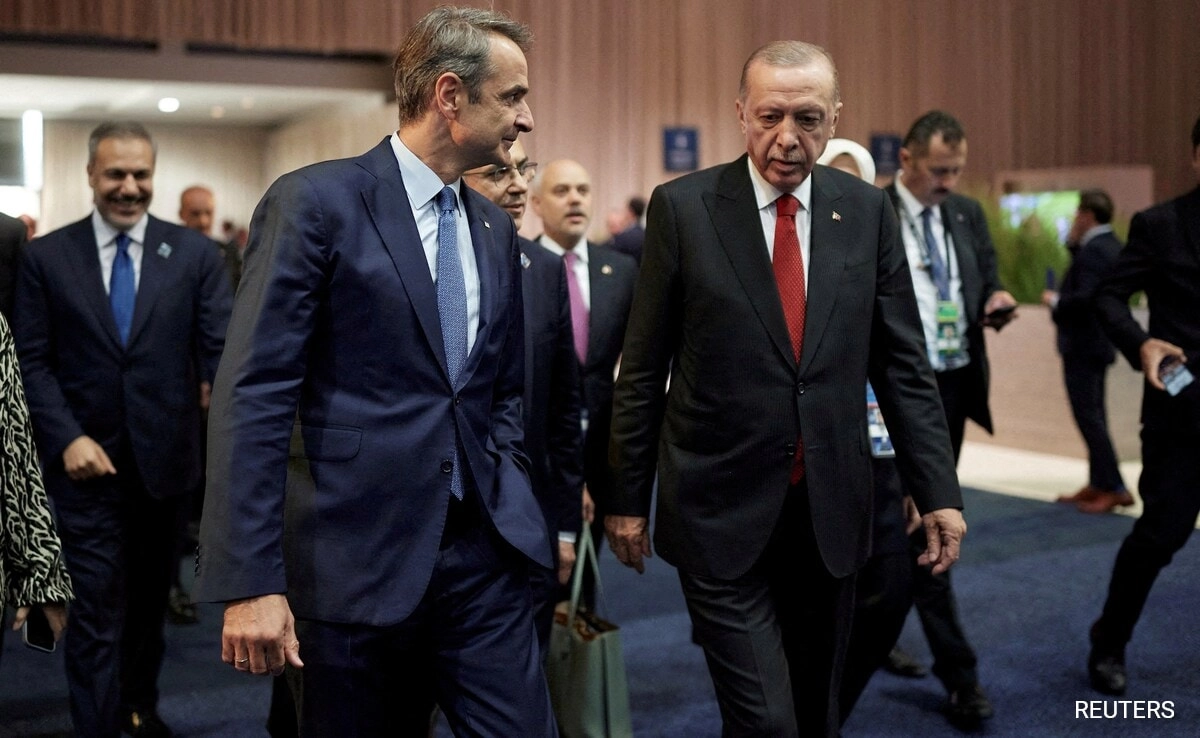
Greece has made a strong statement regarding Turkey’s aggressive stance in the region, asserting that any access Turkey seeks to European Union defense funds is contingent upon the removal of its military threats. This assertion highlights the ongoing tensions between the two nations, particularly in the eastern Mediterranean, where issues such as maritime boundaries, energy exploration, and territorial disputes have been sources of friction. Greece’s position reflects not only its national security concerns but also a broader call for stability in a region that has seen escalating military rhetoric and actions.
The Greek government has emphasized that Turkey’s belligerent posture undermines the principles of cooperation and peace that the EU stands for. In recent years, Turkey has been accused of engaging in provocative actions, including naval maneuvers and airspace violations, which have heightened fears of conflict. Greece argues that any financial assistance or defense collaboration with Turkey should not be considered while it continues to threaten its neighbors. This stance is likely to resonate with other EU member states that prioritize stability and security in the region.
Furthermore, the implications of Greece’s position extend beyond bilateral relations. The EU has been grappling with how to manage its relationship with Turkey, particularly in light of its strategic importance as a gateway between Europe and the Middle East. Greece’s insistence on a precondition for defense funding could influence the EU’s broader strategy towards Turkey, potentially leading to a reevaluation of how the bloc engages with Ankara. As tensions persist, the dialogue surrounding military threats and defense cooperation will be crucial in shaping the future of EU-Turkey relations.
In essence, Greece’s demand for Turkey to lift its war threat before accessing EU defense funds underscores a critical moment in regional diplomacy. It serves as a reminder of the delicate balance that must be maintained to foster peace and cooperation in an area fraught with historical grievances and modern-day challenges. The international community will be watching closely to see how this situation develops and how it may affect the geopolitical landscape in the eastern Mediterranean and beyond. As the stakes rise, the need for constructive dialogue and a commitment to peaceful resolutions becomes increasingly urgent.