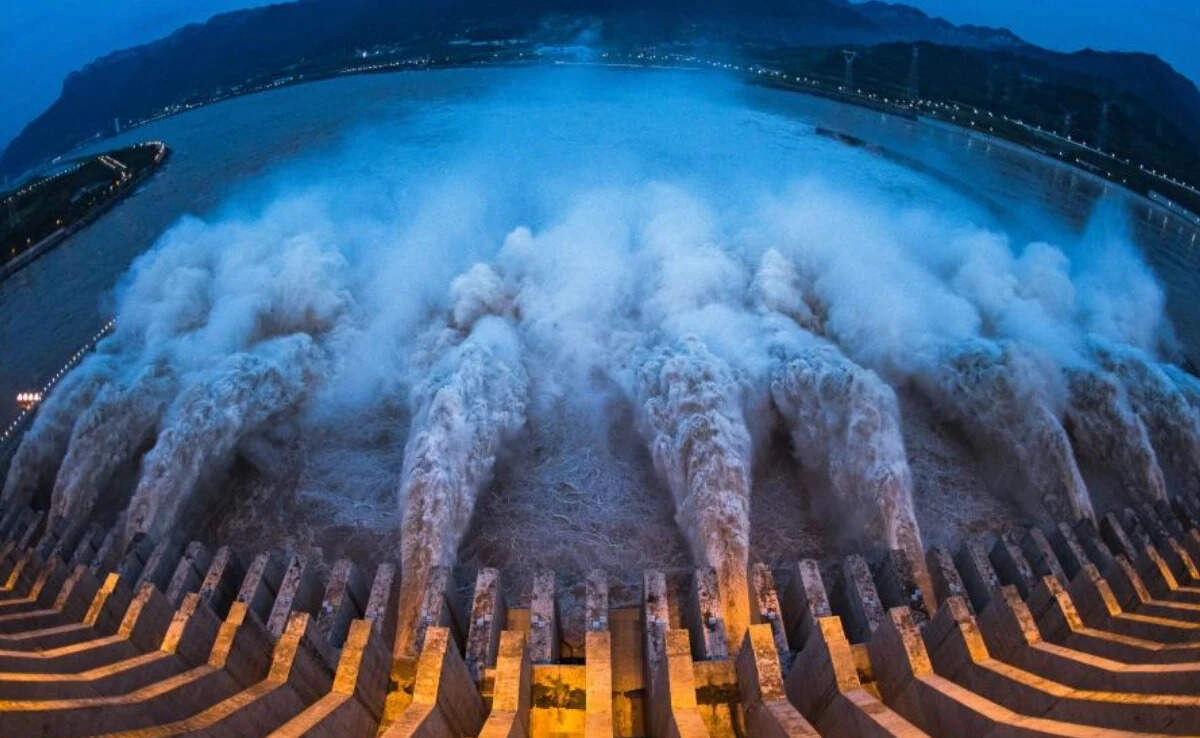
The world’s largest hydropower dam, known as the “Three Gorges Dam,” is located in China and has garnered significant attention for its sheer scale and capacity. Spanning the Yangtze River, this colossal structure not only generates immense amounts of electricity but also plays a crucial role in flood control and river navigation. However, experts in India have raised concerns about the dam, labeling it a “water bomb.” This term reflects apprehensions regarding the dam’s potential environmental and geopolitical implications.
The Three Gorges Dam boasts a generating capacity of over 22,500 megawatts, making it the largest hydropower project globally. While it provides substantial energy to millions and supports China’s rapid industrial growth, it has also sparked debates about its environmental impact. The massive displacement of communities and the submergence of ecosystems have raised questions about the long-term sustainability of such a project. Additionally, the dam’s influence on sediment flow and water quality poses risks not only to local biodiversity but also to downstream countries.
In the context of India, the concerns are amplified by the geopolitical dynamics of water sharing in South Asia. With rivers often crossing national boundaries, the management of water resources is a critical issue. Experts warn that the dam’s operation could affect water availability in neighboring countries, leading to tensions and disputes over rights to this vital resource. The term “water bomb” signifies the potential for conflict that could arise from the dam’s impact on regional water systems.
As countries like India monitor developments related to the Three Gorges Dam, the conversation around hydropower projects is evolving. While there is recognition of the need for renewable energy sources to combat climate change, the lessons learned from China’s experience highlight the importance of balancing energy production with environmental conservation and regional cooperation. The future of hydropower may hinge on how nations address these multifaceted challenges while striving for sustainable development.