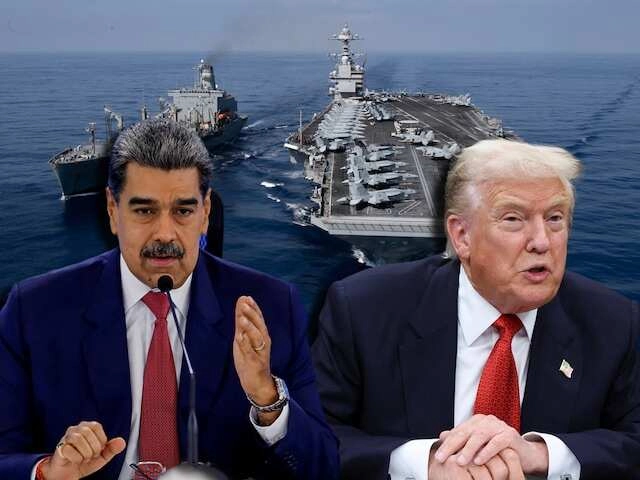
The recent military actions taken by the United States against Venezuela have raised significant questions about the underlying motives behind these interventions. While the U.S. government has often cited the issue of drug trafficking as a justification for its actions, many analysts and observers believe that this is merely a facade. The real intentions may be rooted in political and economic factors that extend beyond the surface-level narrative of combating narcotics.
Venezuela, rich in oil reserves and natural resources, has been facing severe economic and political turmoil in recent years. The U.S. has had a longstanding interest in the region, particularly due to the country’s vast oil wealth. Critics argue that the focus on drug-related issues serves as a convenient excuse for the U.S. to exert pressure on the Venezuelan government and influence the political landscape in Latin America. This raises concerns about the true motivations behind military interventions, as they may involve a strategic agenda aimed at reshaping the region’s power dynamics.
Furthermore, the support for opposition groups within Venezuela also suggests that the U.S. is attempting to destabilize the current regime, which it views as a threat to its interests. The narrative of combating drugs serves to legitimize these actions in the eyes of the international community, while the actual goal may be to install a government more favorable to U.S. policies. As the situation unfolds, it becomes increasingly clear that the complexities of U.S.-Venezuela relations cannot be reduced to a simple battle against drugs; rather, it is a multifaceted geopolitical struggle that reflects broader issues of power, control, and influence in the region.