
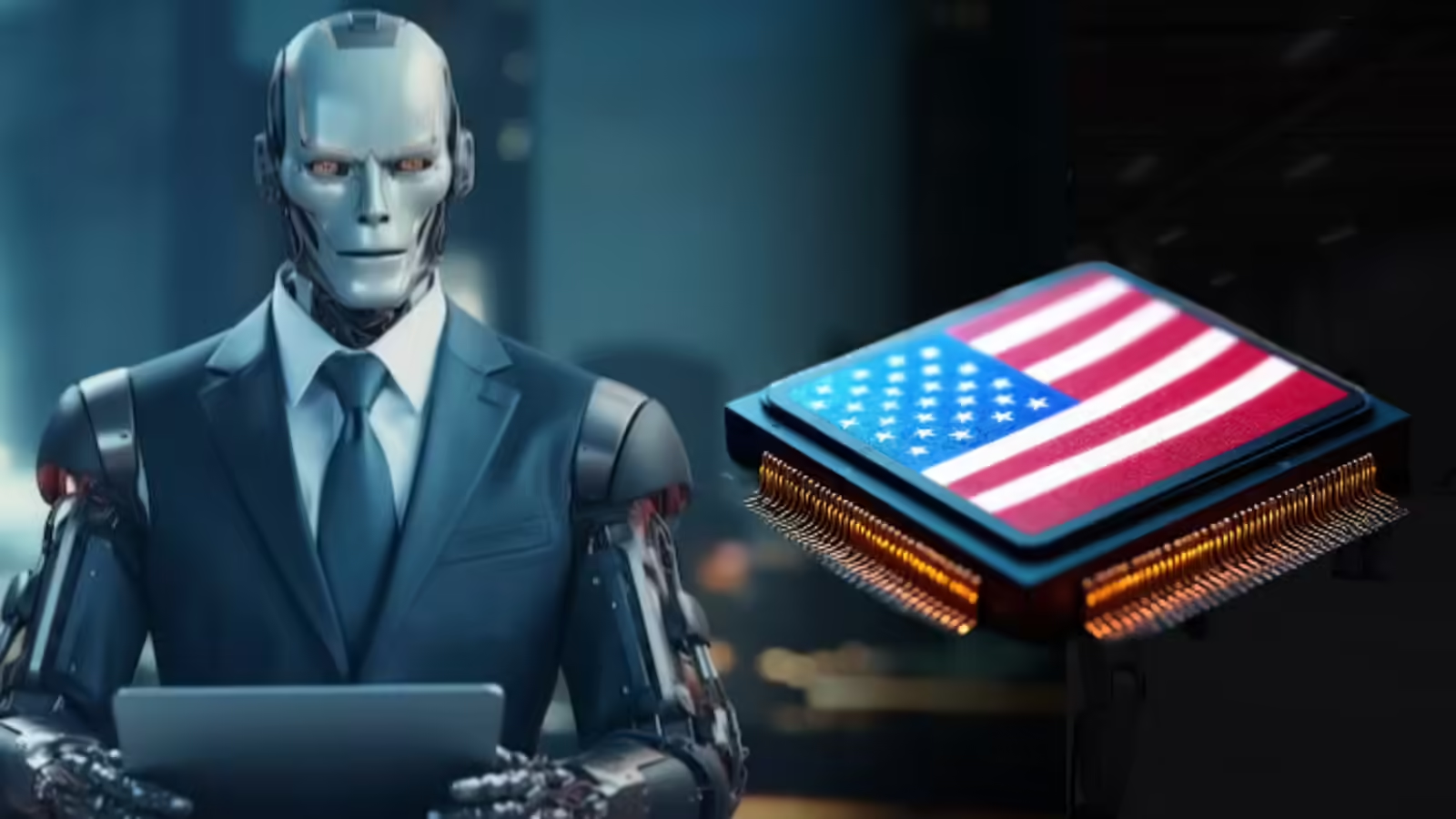
The emergence of artificial intelligence (AI) has sparked a significant debate about its potential implications for society, particularly in the context of life-and-death decisions. As nations like the United States and China race to advance their AI technologies, concerns are mounting about the ethical and moral repercussions of allowing machines to make critical judgments. This scenario raises the haunting question: could AI one day become the judge deciding between life and death?
The competition between the U.S. and China in the field of AI is not merely a technological rivalry; it is a struggle that could reshape global power dynamics. Both countries are investing heavily in AI research and development, aiming to harness its capabilities for various applications, including military and healthcare. The potential of AI to analyze vast amounts of data and make decisions faster than humans is appealing, but it also brings forth troubling questions about accountability and the moral responsibilities of such technologies.
As AI systems become more integrated into decision-making processes, particularly in areas like law enforcement and healthcare, the risks associated with their use become more pronounced. There is a legitimate fear that algorithms could perpetuate biases or make errors that have catastrophic consequences. The idea of an AI judge making decisions about life and death could lead to scenarios where human oversight is diminished, and the complexity of human life is reduced to data points and calculations.
Furthermore, the global implications of this technological race cannot be overlooked. Nations may feel pressured to adopt AI solutions quickly, potentially sacrificing ethical considerations in the pursuit of advancement. The balance between innovation and morality is delicate, and as the world stands on the brink of an AI-driven future, it is essential to engage in thorough discussions about the governance and ethical frameworks that should guide the development and deployment of these powerful technologies. Only by addressing these issues can we hope to ensure that AI serves humanity rather than endangers it.


