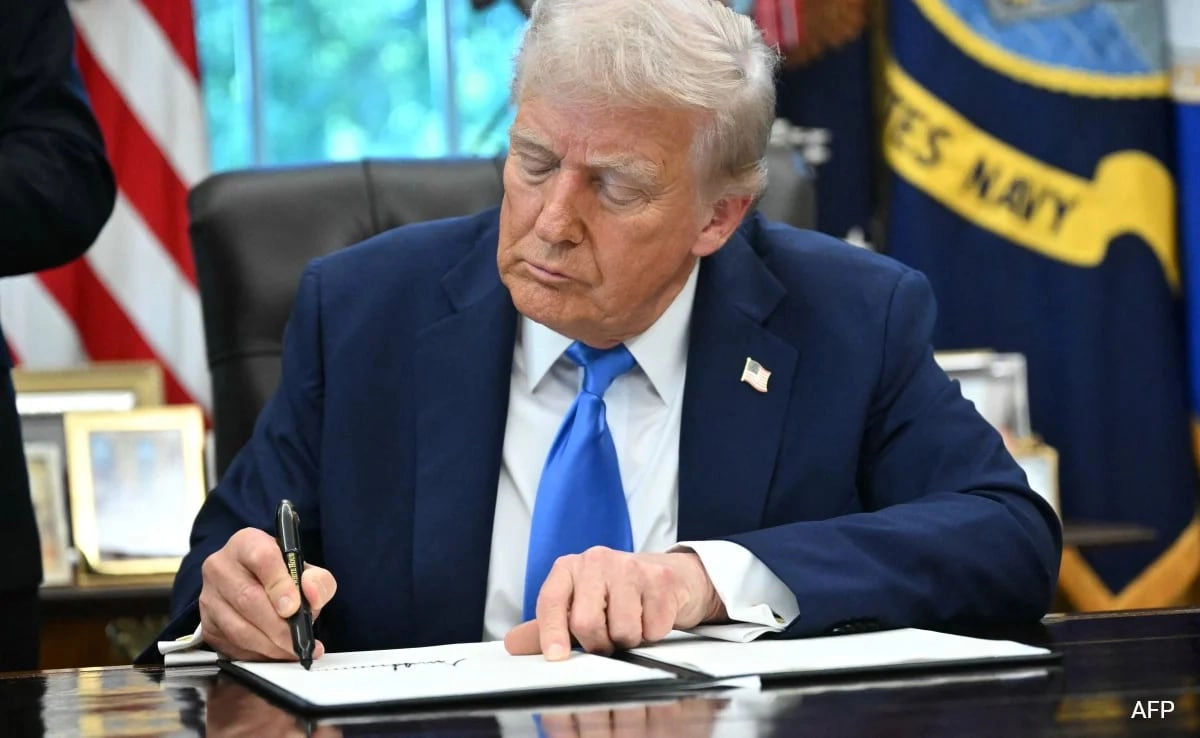
In a significant move that has drawn both support and criticism, former President Donald Trump signed a proclamation imposing a hefty annual fee of $100,000 for H-1B visa applicants. This decision, part of his broader agenda to prioritize American workers over foreign labor, aims to limit the influx of foreign professionals into the U.S. job market, particularly in the technology and engineering sectors. The H-1B visa program, which allows U.S. companies to employ foreign workers in specialty occupations, has long been a focal point of immigration policy discussions. Critics argue that the program is essential for filling gaps in the workforce, particularly in industries that struggle to find qualified candidates domestically.
The proclamation is expected to significantly alter the landscape for businesses that rely on H-1B workers, particularly in Silicon Valley and other tech hubs. Many companies have raised concerns that the increased costs associated with the new fee could hinder their ability to hire the best talent from around the world. Proponents of the fee, however, argue that it will help to ensure that American workers are given priority and that companies are not overly reliant on foreign labor. This move reflects a growing sentiment among certain segments of the population who believe that foreign workers are taking jobs away from Americans, particularly in times of economic uncertainty.
As the implementation of this proclamation unfolds, it raises questions about the future of the H-1B visa program and its impact on the U.S. economy. Critics warn that such a steep fee could deter highly skilled professionals from seeking employment in the United States, potentially leading to a brain drain as top talent opts for opportunities in countries with more favorable immigration policies. Additionally, the increased financial burden on companies may lead to reduced innovation and competitiveness in an increasingly global market. The ramifications of this decision will likely be felt across various sectors, as businesses assess their hiring strategies and adjust to the new financial landscape.
Overall, Trump’s proclamation imposing a $100,000 annual fee for H-1B visas stands as a testament to the ongoing debate surrounding immigration policy in the United States. As stakeholders from various sectors weigh in on the implications of this decision, it is clear that the future of the H-1B program and its role in the American economy is more uncertain than ever. The long-term effects of this proclamation will depend on how businesses adapt and how the labor market evolves in response to changing immigration policies. As the nation navigates these complex issues, the balance between protecting American jobs and fostering an environment conducive to innovation will remain a critical conversation point.