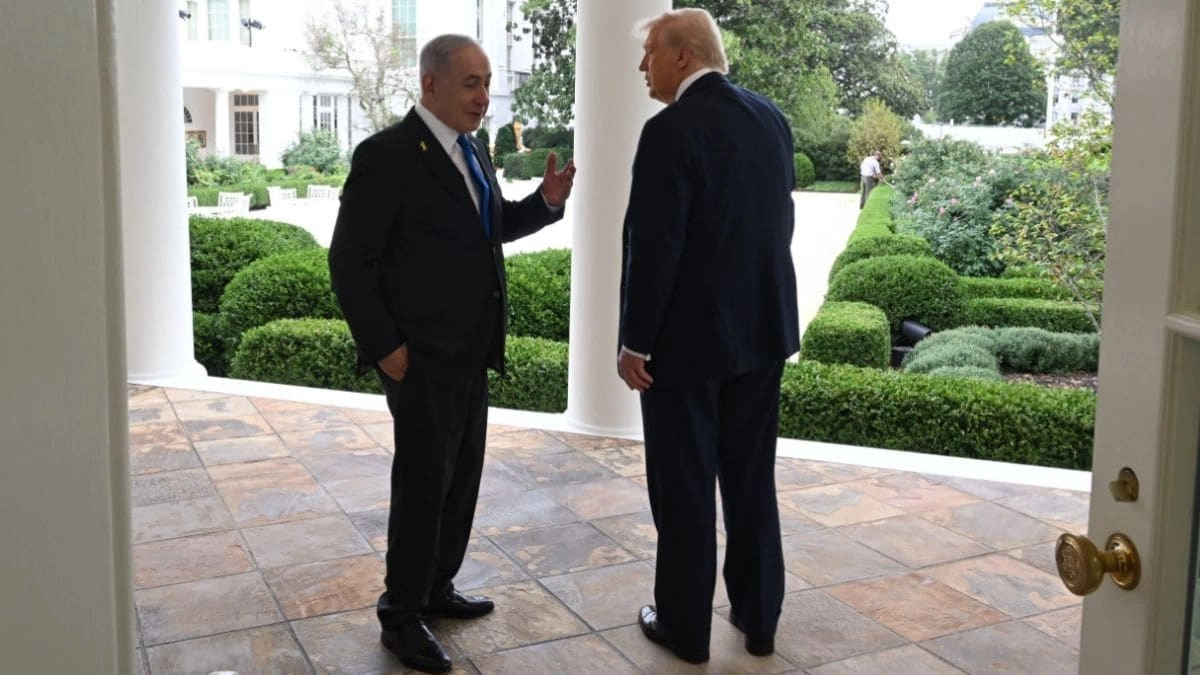
Former President Donald Trump has issued a stark ultimatum to Hamas, demanding a response to his proposed peace plan within three to four days. This announcement comes during a tense period of escalating conflict and heightened tensions in the Middle East. Trump’s approach reflects a blend of urgency and a clear warning regarding the potential consequences of inaction. He emphasized that failure to engage with the peace plan could lead to a “sad end” for Hamas, suggesting that the ramifications of ignoring his proposal could be dire.
The peace plan, which Trump has characterized as a comprehensive solution aimed at fostering stability and security in the region, underscores his commitment to addressing long-standing issues between Israel and Palestine. In his statement, he outlined a vision for a peaceful coexistence that would benefit both parties while also asserting that the international community is watching closely. By giving Hamas a limited timeframe to respond, Trump is not only applying pressure but also signaling to other stakeholders that a proactive stance is necessary to avoid further escalation.
This development raises questions about the effectiveness of Trump’s approach and whether such ultimatums can yield meaningful dialogue. Critics may argue that imposing deadlines could lead to further entrenchment rather than cooperation, while supporters might contend that decisive action is necessary to break the cycle of violence. The geopolitical landscape is complex, and any peace initiative must navigate deeply rooted historical grievances and current realities on the ground. As the world awaits Hamas’s reply, the stakes are high, and the outcome could have significant implications for the future of peace in the region.