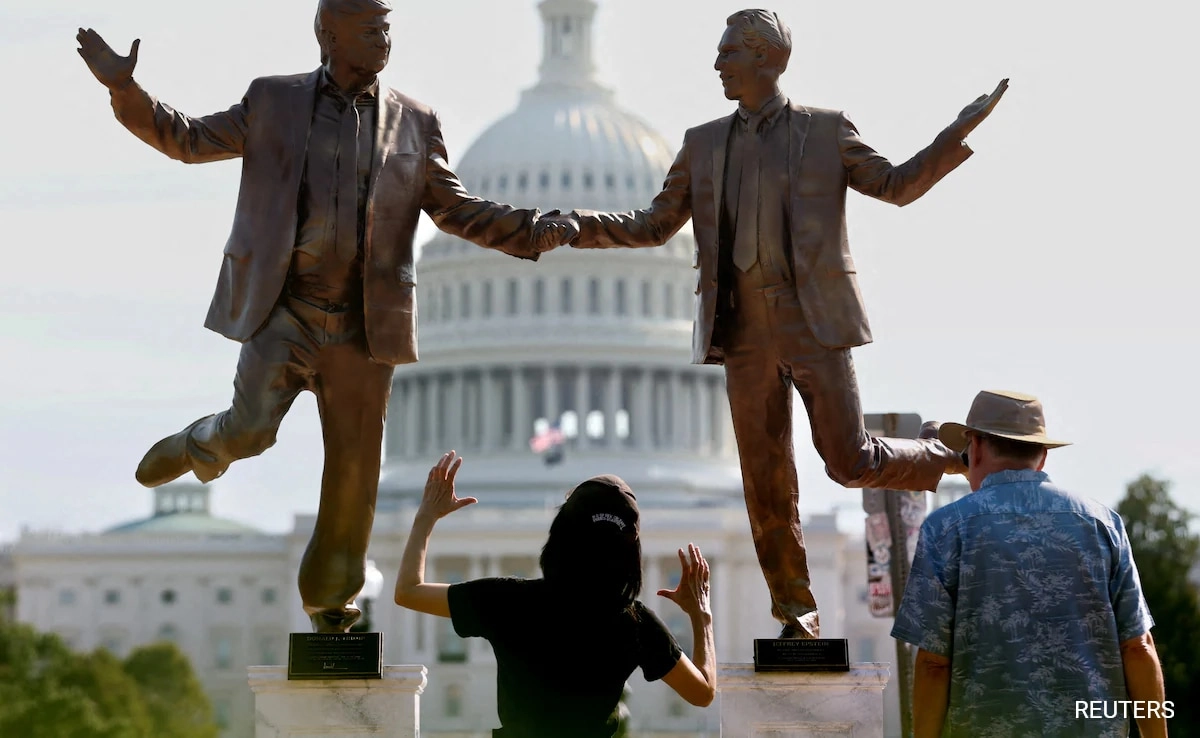
The controversial statue depicting a fictional friendship between former President Donald Trump and Jeffrey Epstein, the notorious financier and convicted sex offender, has been removed from the National Mall in Washington, D.C. This provocative piece of art, which sparked significant public debate and media attention, was installed as part of a temporary exhibition aimed at challenging the perceptions of power and privilege in American society. The sculpture, dubbed “Best Friends Forever,” aimed to critique the connections between influential figures and their moral failings, drawing on the tumultuous relationship between Trump and Epstein, who was known to socialize with several high-profile individuals.
The decision to remove the statue came after widespread backlash from various community groups and political leaders who argued that its presence was inappropriate for a site that honors the nation’s values and history. Critics pointed out that the statue not only trivialized serious issues surrounding sexual abuse and exploitation but also risked overshadowing more critical conversations about accountability in leadership. Supporters of the artwork, however, defended it as a bold commentary on the dark undercurrents of wealth and power in the United States, suggesting that it was essential to confront these uncomfortable truths.
The removal of the statue has reignited discussions about public art and its role in society, particularly in politically charged environments like the National Mall. Advocates for artistic expression argue that art should challenge audiences and provoke thought, even if it incites controversy. Meanwhile, opponents assert that public spaces should reflect the values of the community and honor the dignity of all individuals. This incident highlights the ongoing tension between artistic freedom and societal values, raising questions about who gets to decide what is deemed acceptable in the public sphere.
As the debate continues, the legacy of the Trump-Epstein statue will likely linger in conversations about the intersection of art, politics, and morality. The incident serves as a reminder that public art can be a powerful medium for social critique, but it also underscores the complexities involved in navigating community standards and sensitivities. In an era marked by heightened awareness of social justice issues, this event may prompt further examination of how art can serve as a catalyst for dialogue and change, challenging us to confront uncomfortable truths about those in power and the systems that enable them.