
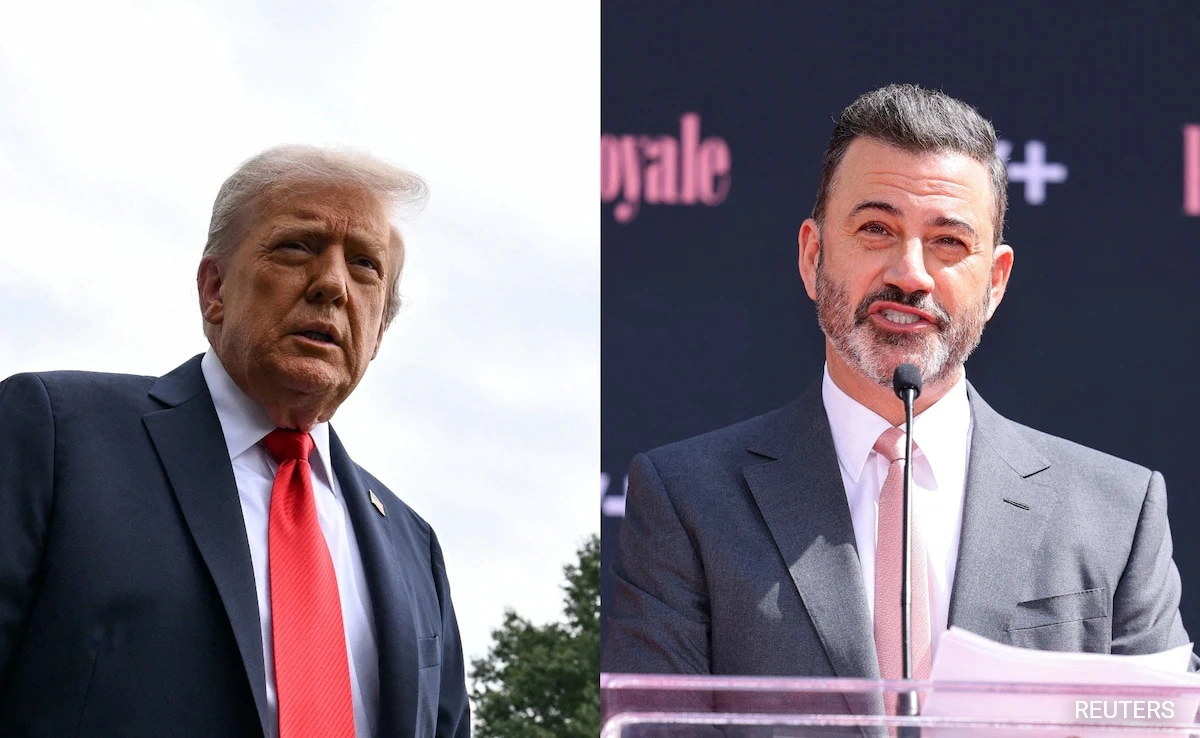
In a recent statement, former President Donald Trump expressed his disdain for late-night television host Jimmy Kimmel, labeling him as someone with “zero talent.” This comment came in response to Kimmel’s suspension from ABC’s “Jimmy Kimmel Live!” following a controversial remark made during a segment that featured conservative commentator Charlie Kirk. Trump’s remarks highlight the ongoing tensions between the political landscape and the world of entertainment, particularly as late-night hosts often grapple with the challenges of balancing humor and political commentary.
Kimmel’s suspension, which was a result of backlash over his comments, has sparked a broader conversation about the role of comedians and talk show hosts in contemporary society. Many argue that figures like Kimmel play a significant role in shaping public discourse, often using satire to critique political figures and policies. However, Trump’s criticism underscores a divide where certain audiences view these comedic takes as unfair or biased. This incident serves as a reminder of the polarized nature of American media, where differing opinions can lead to significant repercussions for public figures.
Additionally, Trump’s comments reflect a larger narrative regarding freedom of speech and the consequences of public statements made by entertainers. In the age of social media, where opinions can quickly escalate into major controversies, Kimmel’s situation serves as a case study in how the boundaries of comedy and political commentary are continually being tested. As late-night hosts navigate their roles as entertainers and commentators, they must also contend with the potential fallout from their remarks, particularly when they touch on sensitive political topics.
The interplay between politics and entertainment is more prominent than ever, and Kimmel’s suspension is a prime example of the challenges faced by comedians in today’s climate. As public figures continue to engage with political issues, the reactions they provoke can lead to significant consequences, prompting discussions about accountability, talent, and the responsibilities that come with a platform. Trump’s dismissal of Kimmel’s abilities could be seen as an attempt to undermine a prominent voice in the media, but it also opens the door for further dialogue about the role of humor in political discourse and the importance of diverse voices in the entertainment landscape.


