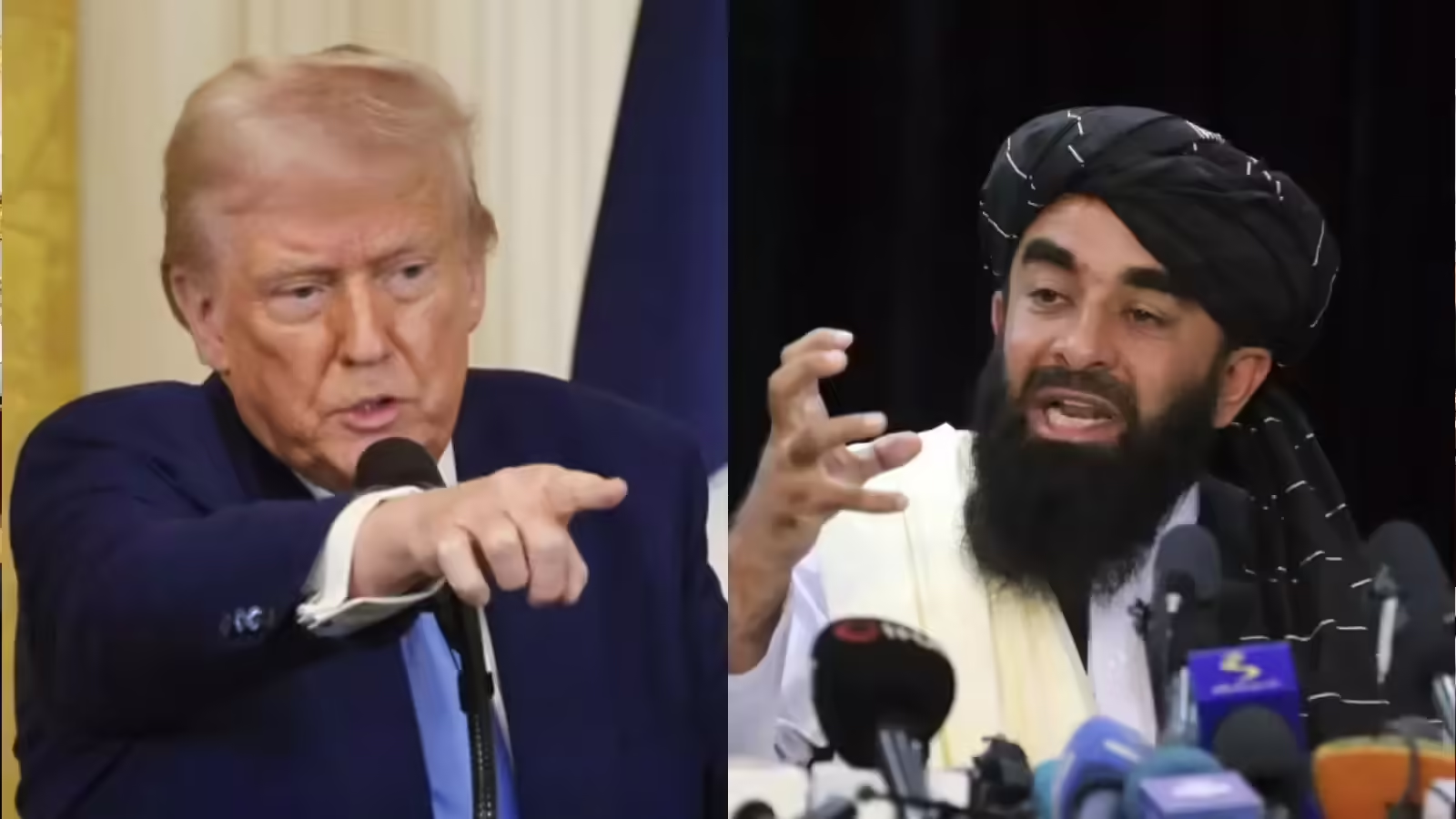
The Taliban recently issued a statement expressing their support for Iran amid growing tensions in the region. In a notable warning directed at former U.S. President Donald Trump, the Taliban made it clear that any aggressive actions taken by the United States could provoke a significant response. This declaration underscores the complex geopolitical dynamics at play, as the Taliban, who have regained control over Afghanistan, seek to align themselves with regional powers like Iran, especially in the face of perceived threats from the U.S.
The statement reflects the Taliban’s desire to assert their influence and reinforce their position in the international arena. By supporting Iran, they are not only strengthening their ties with a key regional player but also signaling to the U.S. that they are willing to challenge American authority in the region. This development comes at a time when relations between the U.S. and Iran are particularly strained, with ongoing disputes over nuclear programs and military presence in the Middle East.
Furthermore, the Taliban’s warning highlights the potential for escalating tensions if the U.S. were to take military action or impose further sanctions. The group seems to be positioning itself as a defender of Iranian sovereignty, which could have broader implications for U.S. foreign policy in the Middle East. The interconnectedness of these geopolitical issues suggests that any miscalculation could lead to unintended consequences, not just for Afghanistan and Iran, but for the entire region. As the situation evolves, the international community will be closely monitoring the actions and responses from both the Taliban and the U.S.