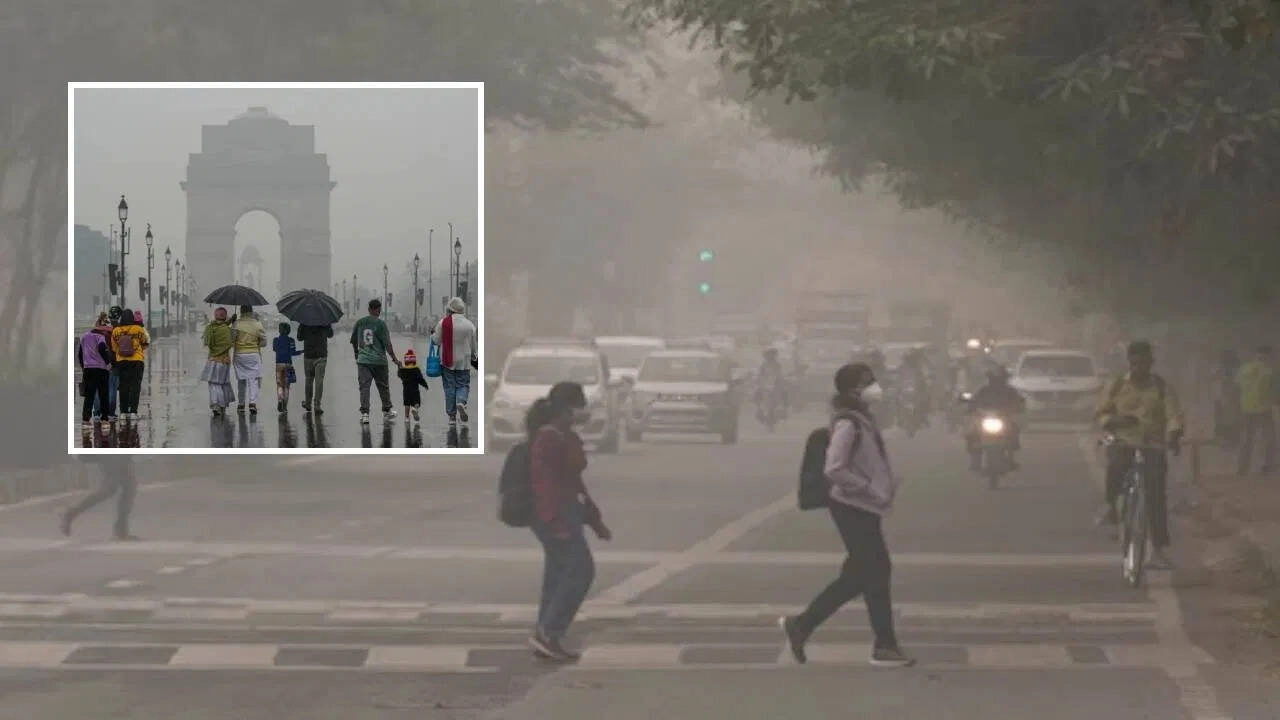
Delhi is currently facing a severe environmental crisis due to a double attack of pollution and fog. Following recent rainfall, the city is experiencing a significant drop in temperatures, leading to a chilling cold that has affected daily life. The combination of low temperatures and high pollution levels has created a challenging situation for residents. Reports indicate that the Air Quality Index (AQI) in over 20 areas of the capital has surpassed the dangerous threshold of 300, categorizing the air quality as “very poor.”
This alarming rise in pollution levels is a result of various factors, including vehicular emissions, industrial discharges, and the burning of agricultural waste in neighboring states. The recent rains, while bringing some temporary relief from the smog, have not been able to clear the persistent pollutants from the atmosphere. Instead, they have contributed to the formation of fog, which traps the pollutants closer to the ground, exacerbating the smog situation.
As the winter season progresses, the residents of Delhi are urged to take precautionary measures to safeguard their health. Vulnerable groups, including children, the elderly, and those with pre-existing respiratory conditions, are particularly at risk. Authorities are being called upon to implement stricter measures to combat pollution and improve air quality. Public awareness campaigns and the promotion of alternative modes of transport are essential in addressing this pressing issue.
In conclusion, the harsh combination of pollution and cold weather is making life increasingly difficult for Delhi’s residents. The government and citizens alike must work together to tackle the sources of pollution effectively and ensure a healthier environment for everyone. Immediate action is needed to mitigate the adverse effects of pollution and restore clean air to the city, especially during these cold months when the situation tends to worsen.