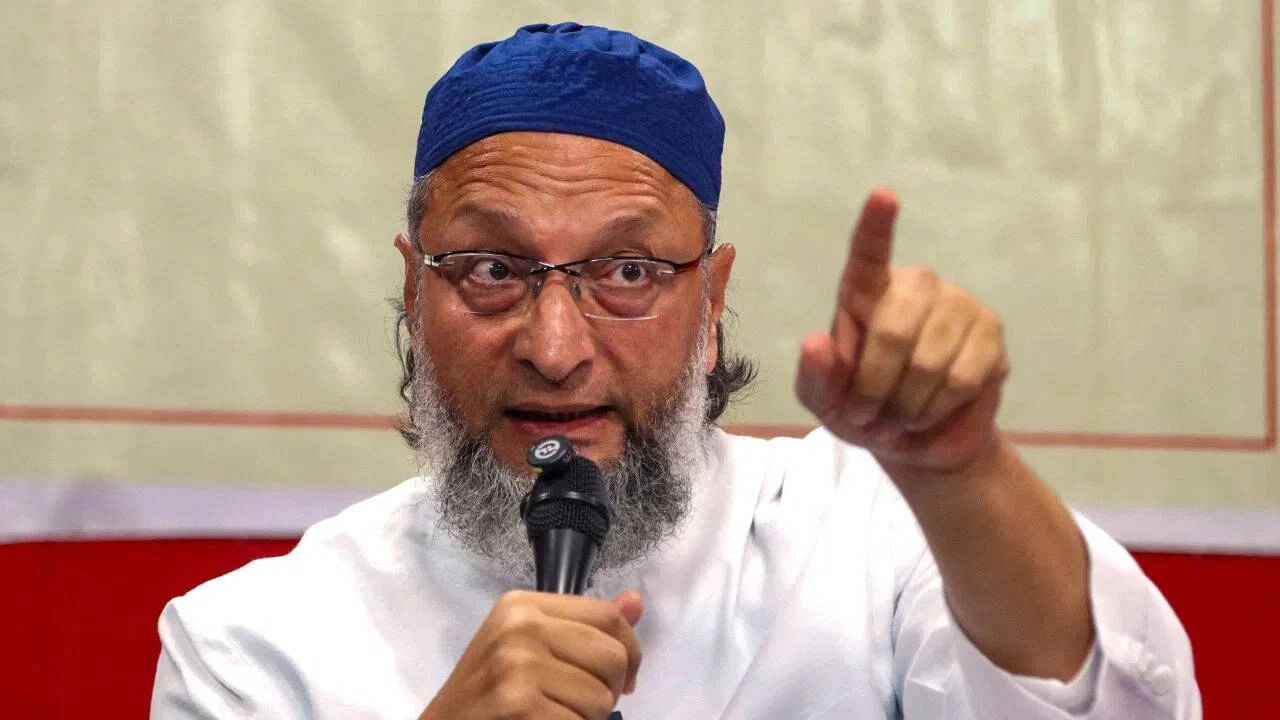
The political landscape in India has been heating up recently due to statements made by Asaduddin Owaisi, a prominent political leader, regarding the constitutions of Pakistan and India, as well as the issue of hijab. During a rally in Solapur, Owaisi’s comments sparked significant controversy and backlash from various political factions. His assertion that the Indian Constitution has been influenced by Pakistan’s legal framework, particularly concerning the rights of minorities and religious expression, ignited fierce debates among political leaders and commentators alike.
Owaisi’s claims were centered on the idea that the Indian Constitution, in its provisions for religious freedom, bears similarities to Pakistan’s Constitution, which is often criticized for its treatment of religious minorities. This comparison drew ire from nationalists and those who view any connection between the two countries with skepticism, especially in light of the historical context of their partition. The ensuing discussions highlighted the complexities of religious identity and legal rights in India, where the hijab has become a symbol of both personal choice and political contention.
The hijab issue, particularly in the context of education and public spaces, has been a flashpoint in recent years, with various states implementing bans or restrictions that have led to significant protests and legal battles. Owaisi’s remarks seemed to position him as a defender of religious rights, framing the hijab as an essential aspect of personal and cultural identity. This perspective, however, has met with resistance from those who argue that such symbols should not be allowed in secular institutions.
As the political drama unfolds, it is clear that Owaisi’s statements have not only reignited discussions around constitutional rights but have also emphasized the ongoing struggle for religious expression in India. The reactions from political leaders across the spectrum indicate that the debate is far from over, with implications for communal harmony, minority rights, and the secular fabric of Indian society. The discourse surrounding these issues continues to evolve, reflecting the diverse and often conflicting narratives that shape the nation’s identity.