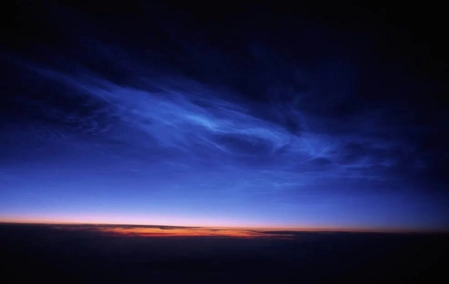
Mysterious “noctilucent clouds” shine brightly at night, continuing to emit light even after the sun has set. These ethereal clouds are a phenomenon that occurs in the upper atmosphere, typically at altitudes ranging from 76 to 85 kilometers. They are primarily formed from ice crystals and are most visible during the twilight hours. As the sun dips below the horizon, its rays can still illuminate these clouds from below, creating a stunning display that appears to sparkle against the deepening darkness of the night sky.
The beauty of noctilucent clouds lies not only in their luminescent quality but also in their rarity and the specific conditions required for their formation. They tend to occur more frequently in the polar regions during the summer months when temperatures are exceptionally low. As more researchers study these clouds, they have found that they might also serve as indicators of climate change. The presence and intensity of noctilucent clouds can be influenced by increased water vapor in the upper atmosphere, which can be a result of rising global temperatures.
For many, witnessing this celestial phenomenon is a mesmerizing experience, offering a glimpse of nature’s wonders. As people gaze up at the night sky, the shimmering clouds remind us of the intricate and delicate balance of our atmosphere. Observing noctilucent clouds can inspire a sense of awe and curiosity about the natural world, prompting individuals to learn more about meteorology, climate science, and the dynamics of our planet’s weather systems. In a world where urban light pollution often obscures the night sky, such phenomena encourage us to seek out clearer skies and appreciate the beauty that exists beyond our everyday lives.