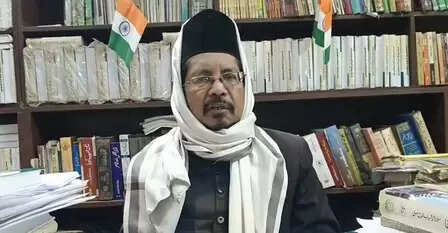
In the ongoing controversy surrounding Haridwar, Maulana Shahabuddin Razvi has made a significant statement emphasizing the need for love over hatred. He strongly advocates for a response rooted in compassion and understanding rather than animosity. His message resonates with the idea that in times of conflict and discord, it is essential to rise above provocation and respond with dignity and respect. By promoting love as the answer, Maulana Razvi aims to foster a sense of unity among communities, urging people to focus on what binds them together rather than what divides them.
The context of the Haridwar dispute has sparked various reactions from different sections of society, with emotions running high. However, Razvi’s call for a peaceful and loving response serves as a reminder of the power of dialogue and mutual respect in resolving conflicts. He underscores that the solution to disputes lies not in escalating tensions but in engaging constructively with one another. Such an approach not only helps to de-escalate the situation but also paves the way for building bridges between differing viewpoints.
Moreover, Maulana Razvi’s statement can be seen as a broader plea for harmony in a diverse society. In a world that often experiences divisions along religious, cultural, and social lines, his emphasis on love encourages individuals to reflect on their shared humanity. This perspective invites everyone to contribute to a more peaceful coexistence where differences are celebrated rather than condemned. By advocating for love as a response, Razvi inspires many to reconsider their approach to conflicts, highlighting that a united front grounded in understanding can lead to lasting peace and reconciliation.