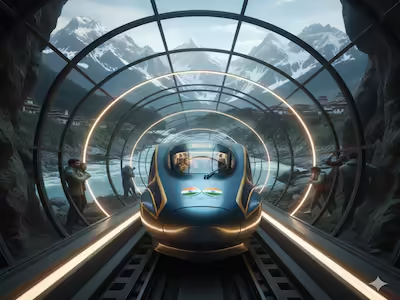
India’s latest engineering marvel, the “Wonder Tunnel,” has dealt a significant blow to China, particularly in terms of transportation efficiency and connectivity. This innovative tunnel, which has been constructed with state-of-the-art technology, allows travelers to cover a distance of 240 kilometers in just 20 minutes. This remarkable achievement not only showcases India’s engineering capabilities but also highlights the country’s commitment to enhancing infrastructure to support economic growth and development.
The Wonder Tunnel is expected to revolutionize the way people and goods move across regions, significantly reducing travel time and enhancing logistical efficiency. This is particularly important in a country like India, where the transportation network has historically faced challenges such as congestion and delays. By enabling faster travel, the tunnel will facilitate smoother trade and commerce, ultimately contributing to the nation’s economy.
Moreover, this engineering feat may also have geopolitical implications, especially in the context of India-China relations. As India continues to strengthen its infrastructure and technological advancements, it may alter the balance of power in the region. The rapid development of such projects not only boosts domestic morale but also sends a clear message to neighboring countries about India’s growing capabilities and aspirations on the global stage.
In conclusion, the Wonder Tunnel stands as a testament to India’s innovative spirit and engineering prowess. As the country embarks on this new chapter of infrastructural development, the benefits of such projects will extend beyond mere transportation, impacting economic growth and international relations in profound ways.