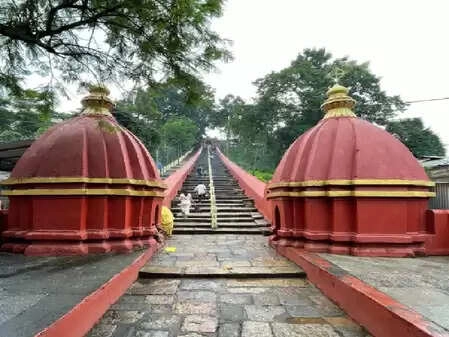
The Hayagriva Madhava Temple is a significant religious site dedicated to Lord Vishnu, one of the principal deities in Hinduism. Located in Assam, India, this temple attracts devotees and tourists alike due to its rich cultural heritage and spiritual significance. The temple is particularly revered for its unique connection to both Buddhism and Hinduism, reflecting the syncretic nature of religion in the region. The name “Hayagriva” refers to an incarnation of Lord Vishnu that is often depicted with a horse’s head, symbolizing wisdom and knowledge.
One of the intriguing aspects of the Hayagriva Madhava Temple is its association with turtles, which are considered sacred in various traditions. In Hindu mythology, the turtle is linked to the second incarnation of Lord Vishnu, known as Kurma, who took the form of a tortoise to support Mount Mandara during the churning of the ocean. This connection underscores the importance of nature and its elements in Hindu philosophy, where animals often embody divine qualities. The temple’s rituals often include offerings of turtles, signifying reverence for life and the interconnectedness of all beings.
Moreover, the Hayagriva Madhava Temple serves as a testament to the shared cultural heritage between Buddhism and Hinduism in India. Both religions have coexisted for centuries, influencing each other’s practices, rituals, and iconography. The temple’s architecture and iconography reflect this duality, showcasing elements that resonate with both faiths. Visitors to the temple can witness the harmonious blend of traditions, which is a hallmark of the spiritual landscape in Assam. Thus, the Hayagriva Madhava Temple stands not only as a place of worship but also as a symbol of unity and coexistence between diverse religious practices in the region.