
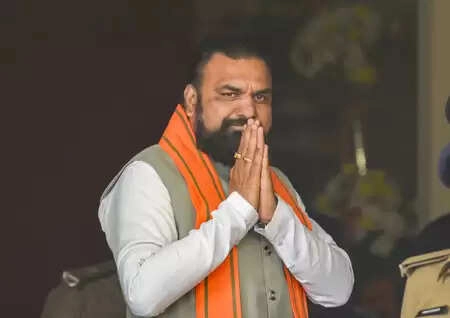
In Bihar, political tensions have escalated following a statement made by Samrat Chaudhary regarding the confiscated assets of Lalu Yadav. Chaudhary, a prominent figure in the state, suggested that a school should be established on the properties seized from the former Chief Minister and leader of the Rashtriya Janata Dal (RJD), Lalu Prasad Yadav. This remark has sparked a heated debate among various political factions in the state, drawing attention to ongoing issues surrounding corruption and asset recovery.
Lalu Yadav, who has faced legal challenges and convictions related to corruption, has seen his properties seized as part of these proceedings. Chaudhary’s proposal to turn these assets into educational institutions raises significant questions about the utilization of confiscated properties and the broader implications for governance and education in Bihar. Supporters of Chaudhary argue that creating schools would serve the public good, providing education to underprivileged children and transforming the narrative surrounding the assets into something positive.
On the other hand, critics of Chaudhary’s statement have condemned it as a politically motivated move aimed at undermining Lalu Yadav and his party. They argue that such comments could further polarize the political climate in Bihar, where the rivalry between the ruling party and the RJD remains intense. The discourse around the proposed school has ignited passionate responses, reflecting the deep-seated divisions in the state’s political landscape.
As the situation unfolds, it remains to be seen how this controversy will impact the upcoming elections and the overall political dynamics in Bihar. While some view the idea of establishing a school as a progressive step, others perceive it as a tactical maneuver in the ongoing political rivalry. The outcome of this debate may influence not only the future of Lalu Yadav’s assets but also the educational framework and political ethos in the state.


