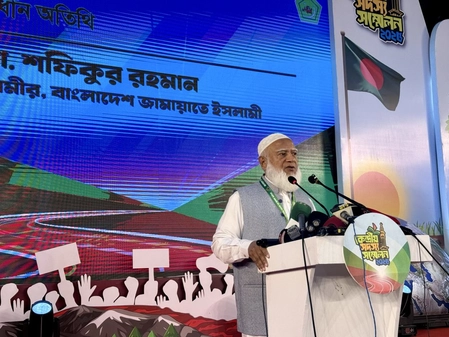
In a recent statement, the Amir of Jamaat-e-Islami in Bangladesh made a controversial assertion regarding women’s leadership within the party. He proclaimed that a woman cannot become the head of the party, a comment that has sparked significant debate and backlash from various quarters of society. This declaration reflects broader societal attitudes towards gender roles and leadership positions in Bangladesh, where traditional views often clash with the growing demand for gender equality and women’s empowerment.
Jamaat-e-Islami, a prominent Islamic political party in Bangladesh, has a history characterized by conservative stances on many social issues, including women’s rights. The Amir’s statement can be seen as part of a larger pattern within the party, which tends to prioritize patriarchal norms over progressive changes. Critics argue that such views inhibit women’s participation in politics and reinforce systemic barriers that prevent women from achieving leadership roles not only in political parties but also in society at large.
The backlash against the Amir’s comments has been swift, with many activists and organizations advocating for women’s rights condemning the statement as regressive. They argue that leadership should be based on merit and capability rather than gender. This incident highlights the ongoing struggle for gender equality in Bangladesh, where despite some advances, women still face numerous challenges in various spheres, including politics.
As discussions unfold around this issue, it is essential for society to reflect on the implications of such statements and the importance of fostering an inclusive environment where women can aspire to and attain leadership positions. The conversation surrounding women’s roles in political parties like Jamaat-e-Islami could serve as a catalyst for broader changes, encouraging a shift towards greater acceptance and support for women leaders in all sectors.