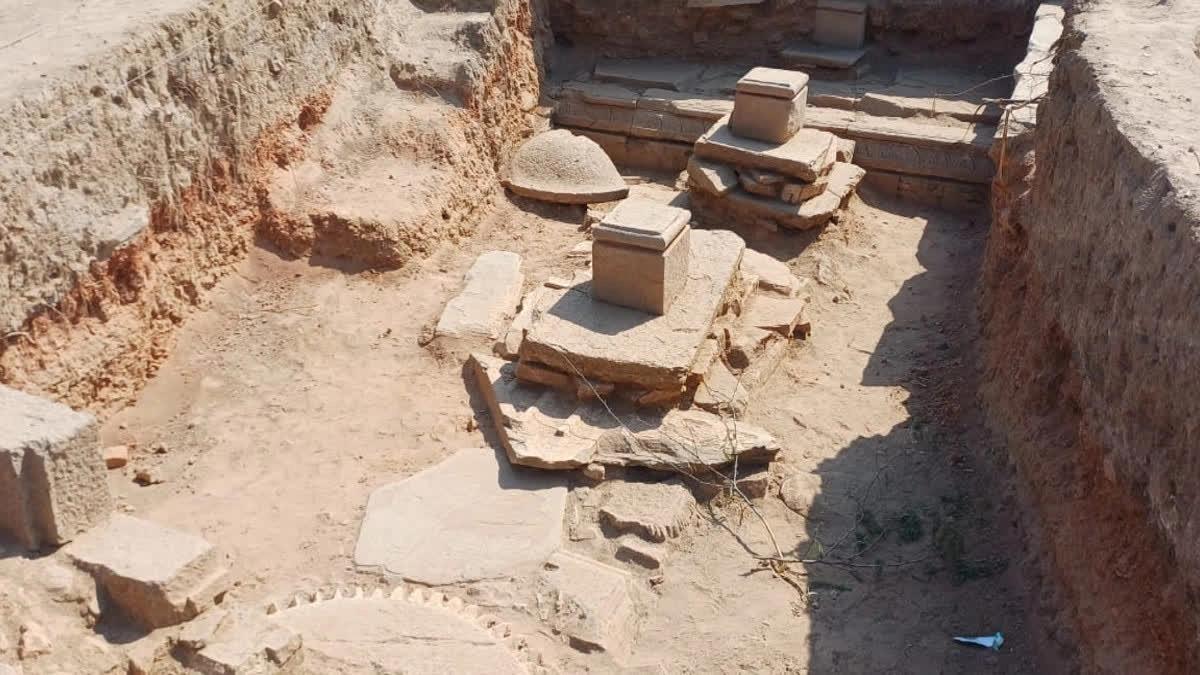
In a remarkable archaeological discovery, remnants of an ancient temple dating back to the 11th century have been unearthed in Khetri, Rajasthan. This finding has significant historical implications, as it sheds light on the architectural and cultural practices of that era. The temple, which was likely dedicated to a local deity, showcases intricate carvings and structures that reflect the craftsmanship of the time.
Local historians and archaeologists are excited by this discovery, as it provides a tangible connection to the region’s past. The temple’s remnants include well-preserved stone carvings, pillars, and possibly remnants of murals that once adorned its walls. Such artifacts are invaluable for understanding the socio-religious dynamics of the period and the artistic expressions that flourished in Rajasthan.
The site is expected to attract attention from researchers and tourists alike, potentially becoming a focal point for heritage conservation efforts. As excavations continue, further insights into the daily lives and spiritual beliefs of the people who once inhabited this area may emerge. The discovery not only enriches the historical narrative of Rajasthan but also emphasizes the importance of preserving such sites for future generations to appreciate and learn from.