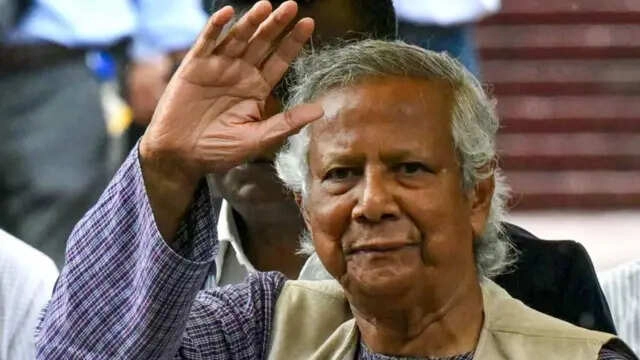
In his recent address, Muhammad Yunus showcased a sharp and confrontational stance, directing his criticisms toward India. His remarks were laced with a sense of animosity, as he unleashed a barrage of accusations that resonated with a strong anti-India sentiment. Yunus’s speech not only highlighted his grievances but also brought attention to the socio-political dynamics within the region, particularly focusing on the ‘Seven Sisters’ – a term that refers to the seven northeastern states of India.
The ‘Seven Sisters’ consist of Arunachal Pradesh, Assam, Manipur, Meghalaya, Mizoram, Nagaland, and Tripura, all of which have unique cultural identities and significant historical contexts. By invoking this topic, Yunus aimed to shed light on the challenges and complexities faced by these states, which often struggle with issues related to governance, ethnic tensions, and economic development. His focus on this region underscored the broader implications of India’s policies and their impact on the local populations, suggesting that there are underlying tensions that deserve more attention.
Furthermore, Yunus’s remarks can be interpreted as a call for introspection among policymakers in India, urging them to consider the diverse perspectives and grievances of marginalized communities. By adopting a more critical view of India’s approach to its northeastern states, Yunus positioned himself as a voice for those who feel overlooked and neglected. This not only amplifies the discourse surrounding regional politics but also raises questions about national unity and the responsibilities of the central government toward its peripheries.
In summary, Muhammad Yunus’s recent address serves as a reminder of the complexities within South Asian geopolitics, particularly concerning India’s northeastern regions. His pointed criticisms and focus on the ‘Seven Sisters’ reflect a broader narrative of dissent and the need for greater dialogue and understanding among the different stakeholders in the region. As the dynamics continue to evolve, his words may resonate with many who share similar concerns, potentially sparking a more significant conversation about identity, governance, and regional cooperation.