
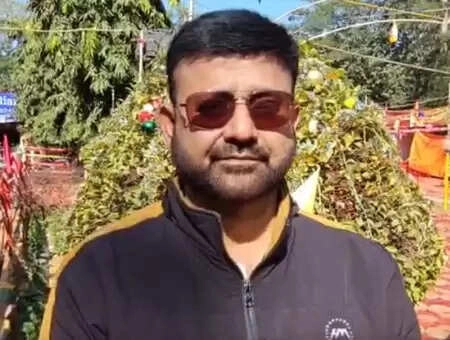
Samajwadi Party (SP) MP Sanatan Pandey recently found himself at the center of a political controversy after a Bharatiya Janata Party (BJP) leader suggested that he should consider going to Pakistan. This statement, which has sparked significant discussion in the political arena, reflects the deep-seated tensions between the two major political parties in India. The BJP leader’s comment appears to be a sharp retort, likely aimed at undermining Pandey’s political stance or comments made in the past.
The context of this remark is crucial, as it underlines the ongoing rivalry and the often heated exchanges between party members. Politicians frequently engage in such rhetoric, employing provocative language to draw attention to their viewpoints and to galvanize their respective supporter bases. The suggestion to “go to Pakistan” has historically been used in political discourse to challenge an opponent’s nationalism or loyalty to the country, positioning the speaker as a defender of Indian sovereignty.
In response to the BJP leader’s comment, Sanatan Pandey may need to navigate this political minefield carefully. Often, such statements can be employed as rallying cries, either to bolster one’s political image or to provoke a counter-response from the opposition. The effectiveness of this tactic ultimately depends on the public’s perception and the existing political climate. As the situation unfolds, it remains to be seen how Pandey and the SP will respond, and whether this exchange will have lasting implications for their political strategies moving forward.
This incident highlights the growing polarization within Indian politics, where rhetoric often overshadows substantive debate. The exchange also calls into question the nature of political discourse in the country, raising concerns about the impact of such comments on communal harmony and national unity. As the political landscape continues to evolve, it is essential for leaders to engage in constructive dialogue, rather than resorting to divisive statements that may further entrench divisions among the populace.


